



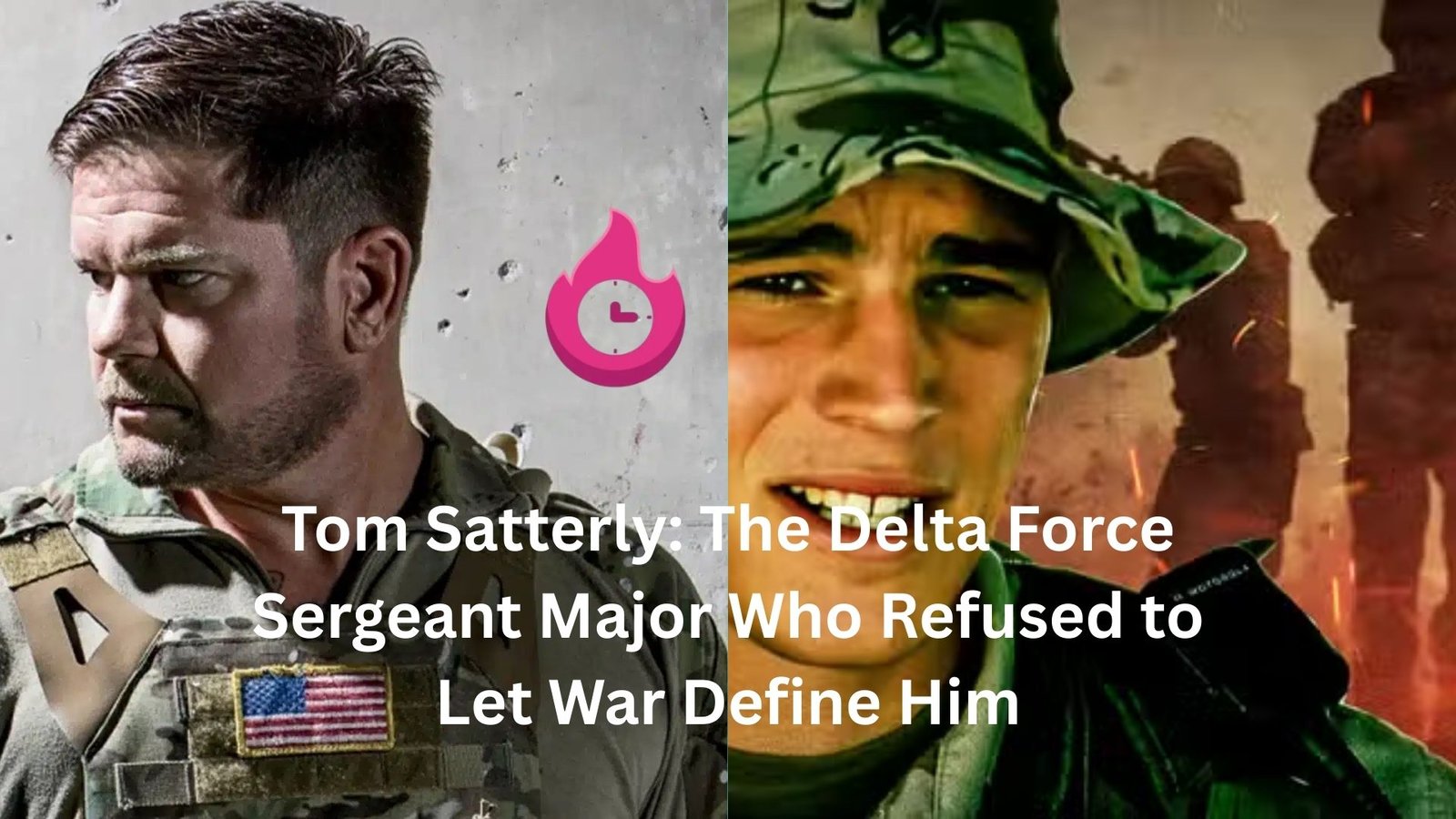
Some people leave the military with stories.
Tom Satterly left with ghosts.
For more than two decades, Satterly served in the U.S. Army’s most elite units, including Delta Force. He deployed to some of the most dangerous places on the planet, led men through high-risk operations, and became one of the most respected non-commissioned officers in special operations.
But the real story of Tom Satterly isn’t just about combat missions or military awards. It’s about what happens after the war ends. The quieter fight. The one that happens at home, in the middle of the night, when the adrenaline is gone and the memories aren’t.
That second battle—recovery, identity, and purpose—has become the most important chapter of his life.
From Indiana Kid to Special Operations
Tom Satterly didn’t grow up with a clear path into elite military units. He was a kid from Indiana, raised in a regular working-class environment. No glamorous origin story. No early prophecy of becoming a legendary operator.
What he did have was grit.
People who knew him early often describe him as competitive and stubborn in the best possible way. If something was hard, he leaned into it. That mindset matters in the military, especially in special operations, where most people quit long before the finish line.
He joined the U.S. Army in the early 1990s.
The transition from civilian life to soldier life is rough for almost everyone. But some people adapt faster than others. Satterly did more than adapt—he excelled. The discipline, structure, and challenge suited him.
Eventually, he set his sights on something bigger: the Army’s most secretive and demanding unit.
Delta Force.
Getting there is brutal. The selection process is designed to break people down mentally and physically. Endless land navigation. Long ruck marches with heavy packs. Very little guidance. Candidates are expected to figure things out alone.
Plenty of extremely capable soldiers fail.
Satterly didn’t.
Life Inside Delta Force
Once someone passes Delta selection, the real work begins. Training becomes even more intense. Operators must master everything: weapons, explosives, close-quarters combat, surveillance, intelligence gathering.
And they need to do it flawlessly under pressure.
Tom Satterly spent years operating inside this world. Quiet missions. High stakes. Little public recognition.
After 9/11, the pace accelerated dramatically.
Special operations forces suddenly found themselves at the center of America’s counterterrorism strategy. Deployments increased. Missions multiplied. Operators rotated in and out of Iraq, Afghanistan, and other regions.
Satterly was there through much of it.
Imagine the rhythm of that life for a moment.
You deploy for months. You come home briefly. You deploy again. Another operation. Another mission briefing. Another flight into the night.
Meanwhile, the rest of the world keeps moving. Kids grow older. Friends change jobs. Families try to adapt to someone who’s constantly leaving and returning.
For elite operators, the focus is always the mission. That’s the culture. That’s the expectation.
But eventually, every operator faces the same moment.
The day they take the uniform off for good.
The Hardest Transition
Here’s the thing many people misunderstand about elite soldiers.
They’re incredibly good at war.
But that skill set doesn’t automatically translate to civilian life.
For Tom Satterly, the transition after retirement was brutal.
Combat leaves marks you can’t see. Years of high-intensity deployments build habits that are useful on the battlefield but destructive at home.
Hyper-vigilance. Emotional shutdown. Adrenaline dependency.
Imagine sitting in a quiet restaurant but constantly scanning exits. Or feeling completely numb when your kids want your attention. Or waking up every night because your brain refuses to relax.
That’s the reality many veterans face.
Satterly has spoken openly about his struggle with post-traumatic stress. There were dark periods—anger, disconnection, and the kind of emotional isolation that slowly pushes people away from everyone who cares about them.
A lot of veterans never talk about this part.
He chose to.
That decision changed everything.
The Role of His Wife, Jen
Behind many military careers is someone holding life together at home. In Tom Satterly’s case, that person was his wife, Jen.
Military spouses live a strange life. They carry the weight of uncertainty, long separations, and the quiet fear that comes with every deployment.
But the real test often comes after service ends.
When Tom retired, Jen saw the impact of years of combat more clearly than anyone else. And instead of ignoring it or pretending everything was fine, she pushed for change.
Therapy. Honest conversations. Real confrontation with trauma.
None of that is easy for someone trained to suppress emotion for decades.
But Satterly gradually began facing it.
Together, they started exploring ways to help other veterans going through the same struggles.
That idea eventually became something much bigger.
The All Secure Foundation
Tom and Jen Satterly co-founded the All Secure Foundation, a nonprofit focused on helping special operations veterans and their families recover from the psychological effects of combat.
The name itself is meaningful.
In military radio communication, “all secure” means everything is safe. The area is clear. The mission environment is stable.
For many veterans, life after service doesn’t feel secure at all.
The foundation works directly with special operations couples, offering programs that address trauma, communication breakdown, and identity loss after military service.
One detail makes their approach different.
They focus on both partners.
That’s important because PTSD doesn’t affect just the veteran. It reshapes entire families.
A spouse might spend years walking on eggshells, unsure how to talk about what’s happening. Kids notice emotional distance but don’t understand it. Relationships strain under pressure.
By working with couples together, the program helps rebuild trust and communication.
It’s not quick or easy.
But it’s real progress.
Speaking Honestly About War
Tom Satterly also wrote a memoir called All Secure.
The book isn’t a chest-thumping war story. There are combat moments, of course. You can’t tell the truth about special operations without them.
But the heart of the story is something else.
It’s about what happens after.
Many military memoirs focus on heroism and tactical details. Satterly’s story spends more time on the emotional aftermath—the confusion of leaving the only identity you’ve known for decades.
Picture spending twenty years in an environment where your purpose is crystal clear.
Protect your team. Complete the mission. Stay sharp.
Then suddenly, one day, that structure disappears.
Civilian life can feel strangely empty by comparison.
That’s the gap many veterans struggle to cross.
Satterly’s willingness to talk about it openly has helped normalize conversations around PTSD, especially in elite military communities where vulnerability hasn’t always been welcomed.
Leadership Beyond the Battlefield
Leadership is often associated with combat decisions—who moves where, how teams respond under fire.
But Tom Satterly’s leadership today looks very different.
It’s quieter.
It might involve sitting across from a struggling veteran and saying something simple: “You’re not the only one dealing with this.”
That sentence can be powerful.
Because isolation is one of the biggest problems veterans face. Many assume their struggles are unique or a sign of weakness.
Hearing someone with Satterly’s background admit the same challenges breaks that illusion.
It changes the conversation from shame to recovery.
And that shift matters.
Redefining Strength
For decades, military culture emphasized toughness above everything else. Push through pain. Ignore emotional stress. Stay mission-focused.
Those traits are necessary in combat.
But they don’t always work in everyday life.
One of the most interesting parts of Tom Satterly’s story is how he reframed strength.
Strength isn’t just enduring hardship.
Sometimes it’s asking for help.
Sometimes it’s admitting something isn’t working anymore.
And sometimes it’s choosing to talk about experiences you’d rather keep buried.
That kind of openness has ripple effects.
When high-profile veterans speak honestly about mental health, it makes it easier for others to do the same.
The stigma begins to crack.
Why Tom Satterly’s Story Resonates
There are thousands of special operations veterans with incredible careers. What makes Satterly’s story stand out isn’t just what he did during his service.
It’s what he chose to do afterward.
Many people try to move on quietly from difficult experiences. That’s understandable. Reliving trauma publicly isn’t appealing.
But by speaking openly—through interviews, the foundation, and his book—Satterly turned his personal recovery into something that helps others.
It’s a different kind of mission.
Not one involving night raids or tactical plans.
Instead, it’s about rebuilding lives.
And for many veterans and families, that mission might matter even more.
The Takeaway
Tom Satterly’s life includes everything people associate with elite soldiers: intense training, dangerous missions, and years inside one of the world’s most secretive military units.
But the most meaningful part of his story comes after the uniform.
He faced the same invisible injuries that affect countless veterans. The difference is that he chose to confront them publicly and use that experience to support others.
