



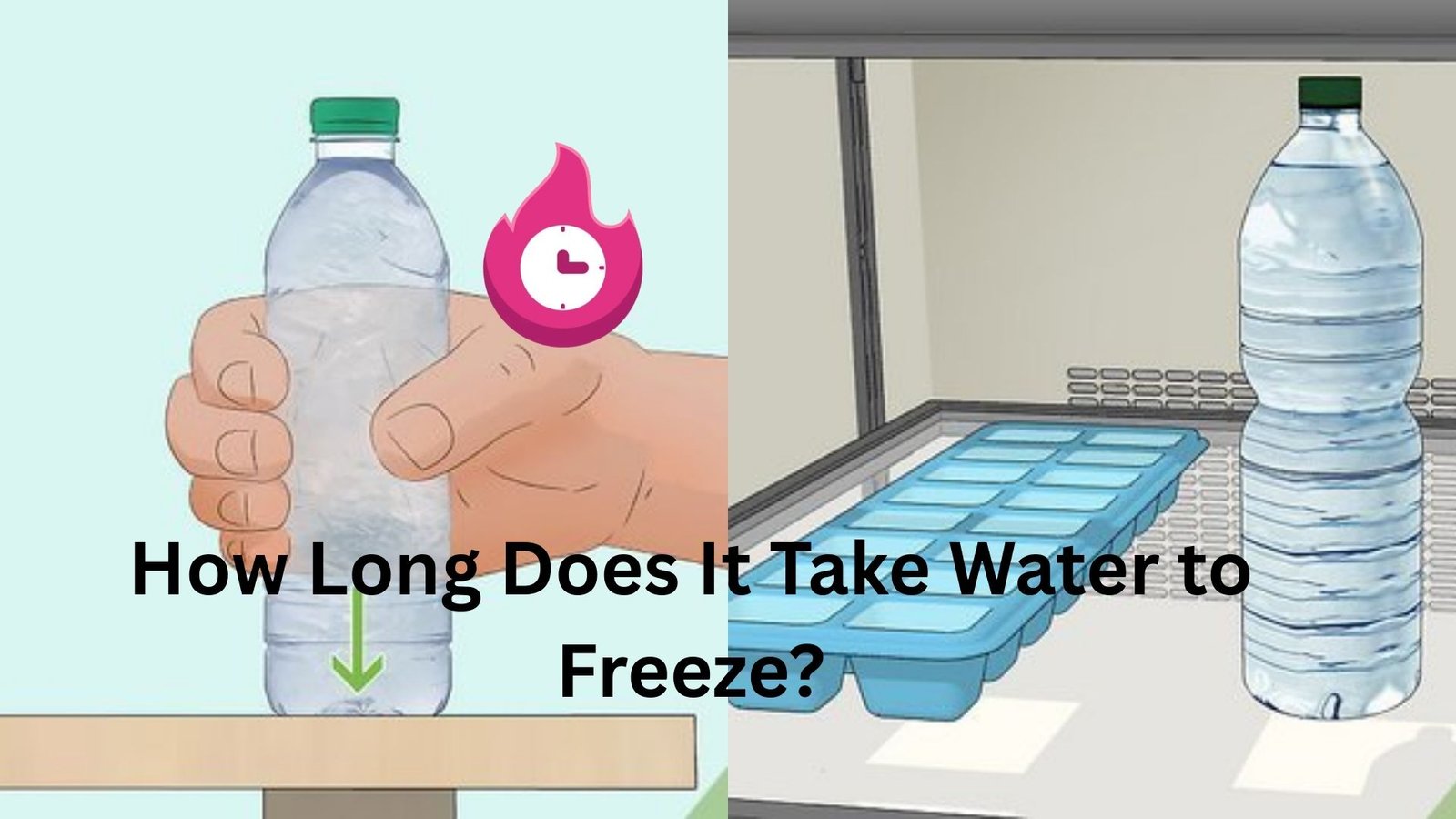
Everyone knows water freezes at 32°F (0°C). That’s basic science. But if you’ve ever filled an ice tray and checked the freezer an hour later, you probably noticed something interesting: it’s not frozen yet.
So how long does it actually take water to freeze?
The honest answer is: it depends. Temperature, container size, water volume, air circulation, and even the type of water all play a role. A thin layer of water might freeze in under an hour, while a full bottle could take most of the night.
Understanding why this happens makes everyday things—like making ice, chilling drinks, or dealing with winter weather—a lot more predictable.
Let’s break it down in a practical, real-world way.
The Average Freezing Time in a Home Freezer
In a typical household freezer set to 0°F (-18°C), a standard ice cube tray usually takes 3 to 4 hours to freeze solid.
That’s the baseline most people experience.
If you fill the tray at dinner, the cubes are normally ready before bedtime. But check after an hour or two and the surface may be frozen while the inside is still slushy. Water freezes from the outside in, so it takes time for the cold to penetrate all the way through.
Now picture a larger container—say a bowl of water or a full bottle. The freezing time can easily stretch to 6 to 12 hours, sometimes longer.
Volume matters. A lot.
A thin layer of water loses heat quickly. A thick mass holds onto warmth much longer.
Why Water Doesn’t Freeze Instantly
At first glance, freezing water sounds simple. Lower the temperature below 32°F and boom—ice.
But freezing actually involves removing heat energy from the water until the molecules slow down enough to lock into a crystal structure. That takes time.
Even after water reaches 32°F, it still needs to release additional energy before it fully solidifies. Scientists call this the latent heat of fusion, but in everyday terms it just means freezing is a process, not a switch.
Think of it like cooling a pot of soup. The burner may be off, but the soup stays hot for a while because the heat has to dissipate.
Water behaves the same way in reverse when it freezes.
Container Size Changes Everything
A quick experiment makes this obvious.
Pour water into three different containers:
- a shallow plate
- a standard ice tray
- a large plastic bottle
Put all three in the freezer at the same time.
The plate might freeze in under an hour. The ice tray takes several hours. The bottle might still have liquid inside long after the others are solid.
The reason is surface area.
More exposed surface means faster heat loss. Thin water spreads out and cools quickly. Thick volumes trap heat inside.
This is also why large lakes freeze slowly in winter, while shallow puddles turn to ice overnight.
Freezer Temperature Makes a Big Difference
Not every freezer runs at the same temperature.
Some older freezers hover closer to 10°F (-12°C) instead of 0°F. That small difference can stretch freezing times significantly.
Colder environments pull heat from water faster. If a freezer is packed tightly or opened often, the temperature rises slightly, which slows the process.
You can sometimes see this effect when making ice before a party. The freezer door opens repeatedly, warm air sneaks in, and the cubes take longer than usual.
It’s one of those small everyday details most people don’t think about until they’re waiting for ice.
The Starting Temperature of the Water
Warm water obviously takes longer to freeze than cold water.
Pour boiling water into a tray and it may take five hours or more before it becomes ice. Cold tap water will freeze faster.
But here’s where things get interesting.
Under certain conditions, hot water can freeze faster than cold water. This strange phenomenon is called the Mpemba effect.
It doesn’t happen every time, and scientists still debate exactly why it occurs. Possible reasons include faster evaporation, convection currents, or dissolved gases escaping from the hot water.
For everyday ice making, though, cold water still wins most of the time.
Water Purity Can Affect Freezing
The type of water you use can subtly change freezing time.
Tap water contains minerals and dissolved gases. Distilled water is much purer. Salt water behaves differently again.
Salt lowers the freezing point, which is why salt is used on icy roads in winter. Add enough salt and water won’t freeze until temperatures drop well below 32°F.
That’s also why ocean water doesn’t freeze as easily as freshwater lakes.
In the kitchen, the difference between tap and filtered water usually isn’t dramatic, but it can slightly change how quickly ice forms and how clear it looks.
Why Ice Cubes Freeze From the Top Down
Ever noticed that ice trays freeze from the surface first?
That’s because cold air in the freezer cools the exposed top layer fastest. Ice begins forming there, creating a thin solid sheet.
Below that surface layer, the water is still liquid.
Over time, the freezing front slowly moves downward until the entire cube solidifies.
This top-down freezing explains why ice cubes sometimes look cloudy inside. As the freezing progresses, dissolved air and minerals get pushed toward the center.
Fancy cocktail bars actually use directional freezing techniques to create crystal-clear ice blocks by controlling this process.
It’s surprisingly fascinating for something as ordinary as ice.
Outdoor Freezing Times in Winter
Outside the freezer, freezing depends heavily on weather conditions.
If the air temperature is well below 32°F, a shallow puddle can freeze in 30 minutes to 2 hours. A bucket of water might take several hours.
Wind speeds things up by carrying heat away from the water’s surface. Clear nights also help because heat radiates away into the sky.
That’s why you might wake up to frozen birdbaths even when the evening didn’t feel that cold.
Nature is constantly moving heat around.
Why Large Bodies of Water Take So Long
People sometimes wonder why lakes don’t freeze instantly when temperatures drop below freezing.
The answer is scale.
Large bodies of water store massive amounts of heat. Even when air temperatures fall below 32°F, the deeper layers remain relatively warm.
Surface water must cool first. Once it reaches freezing, ice begins forming on top while the deeper water stays liquid.
This process can take days or even weeks, depending on weather conditions.
That’s also why fish survive under frozen lakes during winter. The ice layer actually insulates the water below.
A Quick Practical Guide
For everyday situations, these rough time estimates work pretty well:
Ice cube tray: 3–4 hours
Shallow water layer: 1–2 hours
Bottle of water: 6–12 hours
Large container: overnight or longer
Outdoor puddle in freezing weather: 30 minutes to a few hours
These aren’t exact numbers, but they’re realistic expectations.
A Small Trick If You Need Ice Faster
Sometimes you need ice quickly—maybe guests are coming over or a drink needs chilling.
A simple trick helps speed things up: use smaller amounts of water.
Half-fill an ice tray or use silicone trays with smaller molds. Less water freezes faster. It’s that simple.
Another helpful move is making sure there’s space around the tray so cold air can circulate freely.
Crowded freezers slow everything down.
The Simple Takeaway
Water freezing seems like a straightforward idea, but in real life it’s surprisingly variable.
A small ice cube might freeze in a few hours. A bottle could take most of the night. Outside, a thin puddle may turn to ice before morning while a lake waits weeks for winter to settle in.
The key factors are always the same: temperature, volume, and surface area.
Once you understand those three things, predicting freezing time becomes pretty easy.
And the next time you open the freezer hoping for ice, you’ll have a much better idea of whether it’s ready—or if you’ll need to wait a little longer. 🧊
