



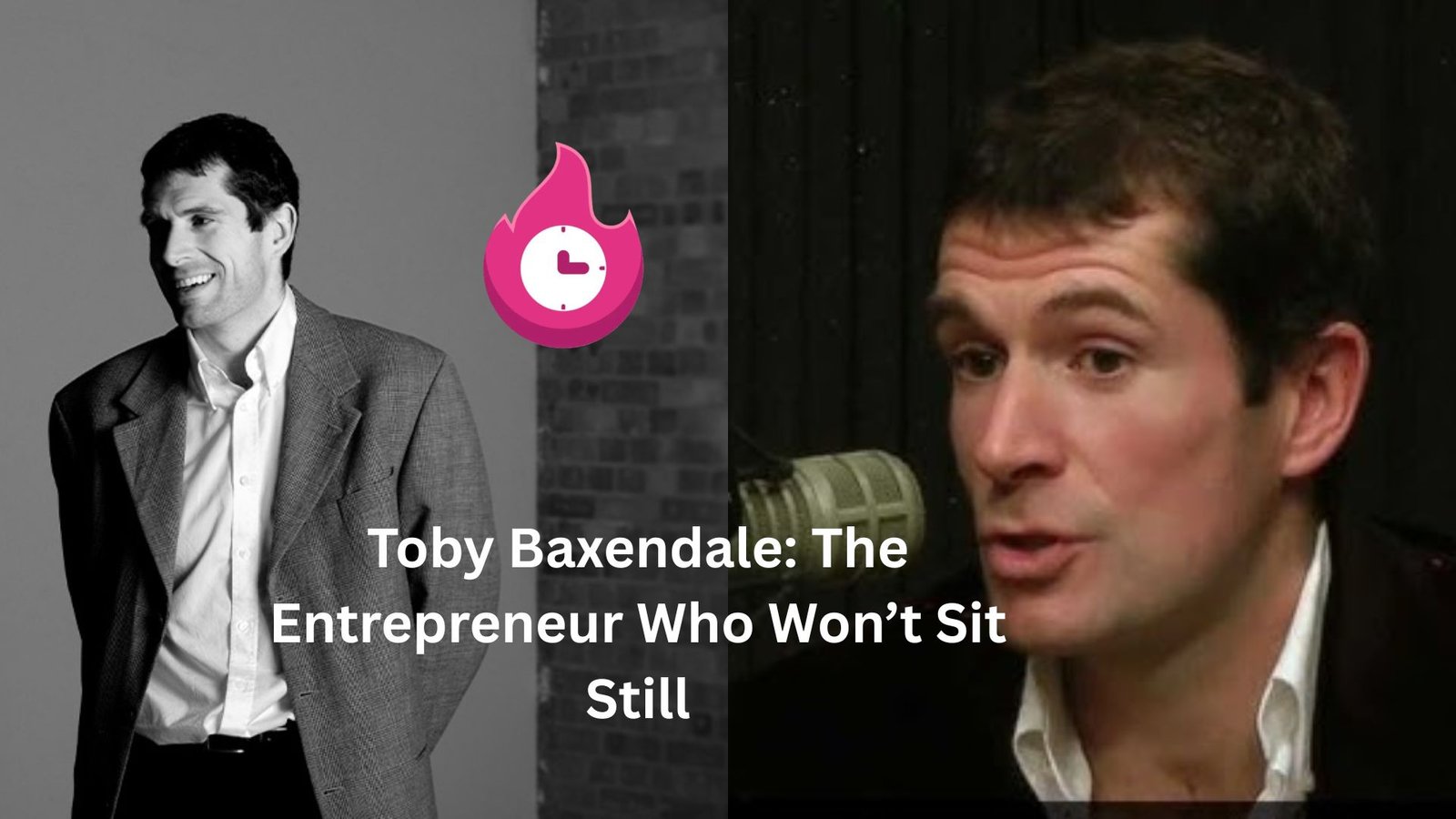
There’s a certain type of entrepreneur who builds one business, sells it, and quietly disappears. Toby Baxendale is not that person.
He’s the kind who keeps going. Different industries, different risks, same underlying drive. If you’ve ever wondered what pushes someone to jump from seafood logistics to financial activism to publishing ideas, Baxendale is a fascinating case study. Not because he follows a neat path, but because he doesn’t.
From Fish Markets to Big Thinking
Let’s start somewhere grounded.
Baxendale built his early reputation in the seafood industry. Not glamorous, not trendy. Cold storage, supply chains, early mornings. The kind of work most people overlook until their restaurant order arrives late.
He co-founded Direct Seafoods, a company that grew into a major supplier for restaurants across the UK. That alone says something. Food logistics is brutal. Margins are tight. Mistakes are expensive. If your delivery is off by a few hours, a chef isn’t forgiving.
Picture this: a busy London restaurant at 7 PM. The kitchen is slammed, orders are stacking up, and suddenly the fish delivery isn’t right. That’s not just an inconvenience, it’s lost revenue and reputation. Businesses like Baxendale’s exist to make sure that scenario doesn’t happen.
He wasn’t building something flashy. He was building something reliable. That’s harder than it sounds.
Eventually, Direct Seafoods was sold to a larger group. For many founders, that would’ve been the exit. Time to relax, maybe dabble in angel investing, show up at conferences.
Baxendale went the other way.
A Shift Toward Ideas, Not Just Business
Here’s where things get more interesting.
After stepping back from the seafood world, Baxendale leaned heavily into economic thought, particularly Austrian economics. Not the kind of thing most business owners jump into after a sale.
Now, let’s be honest. Most people don’t spend their time thinking deeply about monetary systems or central banking unless it directly affects them. Baxendale did.
He became involved with organizations like the Cobden Centre, which focuses on sound money and free-market principles. This wasn’t just casual interest. He funded research, supported publications, and helped push conversations that sit far outside mainstream business chatter.
Why does that matter?
Because it shows a shift from building companies to shaping ideas. And ideas, especially economic ones, have long tails. They influence policy, investment decisions, and how people think about risk.
The Gold Standard Rabbit Hole
At some point, Baxendale’s interests narrowed in on money itself. Not just earning it or investing it, but questioning what it actually is.
He’s been a vocal supporter of gold-backed monetary systems. That puts him in a relatively small camp in today’s world of fiat currencies and digital transactions.
You might think that sounds outdated. Gold? Really?
But here’s the thing. His argument isn’t about nostalgia. It’s about stability and trust. He, along with others in that space, believes that currencies backed by tangible assets impose discipline. Governments can’t just expand supply endlessly without consequences.
Agree or disagree, it’s a serious position. And Baxendale doesn’t treat it as theory. He’s supported initiatives and discussions around bringing gold back into the monetary conversation in practical ways.
Imagine you’re running a business and planning five years ahead. Inflation is unpredictable, currency values shift, and policies change overnight. Now imagine operating in a system where money holds more consistent value. That’s the world Baxendale is interested in exploring.
It’s not a mainstream view. But it’s not a careless one either.
Publishing, But Not the Usual Kind
Another thread in his work is publishing. Not in the “write a bestseller and go on tour” sense, but in backing and distributing ideas.
He’s been involved with projects that promote classical liberal thought, Austrian economics, and critiques of modern financial systems. These aren’t airport bookstore topics. They’re niche, often dense, and aimed at readers who want to go deeper.
Still, there’s something practical about it.
Think about how ideas spread today. Social media moves fast, but depth gets lost. Publishing, even in smaller circles, creates something more permanent. A book or essay can sit with someone, challenge them, reshape how they think over time.
Baxendale seems to understand that. Business builds infrastructure. Ideas build frameworks.
He’s worked on both.
A Pattern of Independence
If there’s one thread that ties everything together, it’s independence.
Baxendale doesn’t seem interested in following trends. Seafood logistics wasn’t trendy when he started. Austrian economics isn’t trendy now. Gold-backed money definitely isn’t trending on most startup blogs.
And yet, he keeps choosing paths that align with his own thinking rather than what’s popular.
That’s harder than it looks.
Let’s say you’ve just sold a successful company. You’re financially comfortable. The easiest move is to follow established circles. Venture capital. Tech investing. Advisory roles. Safe bets.
Instead, Baxendale went deeper into areas where he likely faces more disagreement than applause.
That says something about how he makes decisions.
Risk, Just in a Different Form
It’s easy to look at his post-business career and think it’s less risky. No warehouses, no delivery trucks, no operational chaos.
But the risk didn’t disappear. It just changed shape.
Backing ideas, especially controversial ones, carries reputational risk. Funding research that challenges mainstream economic policy can put you at odds with institutions. Even supporting alternative monetary systems can be seen as fringe depending on the audience.
There’s also the risk of irrelevance. If your ideas don’t gain traction, they fade quietly.
So in a way, Baxendale traded operational risk for intellectual risk. Different game, same stakes.
What Entrepreneurs Can Take From This
You don’t have to agree with Baxendale’s views to learn from his path.
One clear takeaway is that a career doesn’t have to stay in one lane. Skills transfer more than people expect. Running a seafood business teaches logistics, negotiation, resilience. Those same skills apply when backing think tanks or publishing work.
Another point is curiosity. He didn’t stop at “business success.” He kept asking questions. About money, systems, incentives. That kind of curiosity often leads to unexpected directions.
Here’s a small scenario.
Imagine two founders who exit their companies. One sticks to familiar territory, investing in similar startups. The other starts exploring something completely different, maybe energy policy or education reform.
Ten years later, their impact looks very different. Not necessarily better or worse, just different in scope.
Baxendale clearly chose the second path.
The Quiet Influence of Niche Ideas
There’s a tendency to underestimate niche ideas. If something isn’t widely discussed, it’s easy to assume it doesn’t matter.
But history doesn’t work like that.
Many influential economic ideas started on the fringes before moving into the mainstream. The people backing those ideas early often play a quiet but important role.
Baxendale sits in that space. Not necessarily the loudest voice, but part of the ecosystem that keeps certain conversations alive.
And sometimes, that’s enough to shift things over time.
Not a Household Name, And That’s Fine
Let’s be honest. Toby Baxendale isn’t a household name.
He’s not on magazine covers. He’s not building consumer tech products. You won’t see his name trending.
But influence doesn’t always look like visibility.
Some people build widely recognized brands. Others build networks, ideas, and frameworks that operate behind the scenes. Baxendale fits more into the second category.
If you’re someone who values recognition, that path might not appeal. If you care more about shaping direction than getting attention, it might make more sense.
A Life That Doesn’t Fit a Template
What makes Baxendale interesting is that his story doesn’t fit neatly into a single narrative.
He’s not just “the seafood guy.” Not just “the economic thinker.” Not just “the investor.”
He moves between roles.
That can look messy from the outside. People like clear labels. It’s easier to understand someone when they stay in one box.
But real careers rarely work that way, especially over decades.
You start in one place, pick up skills, shift interests, follow new questions. Some moves make perfect sense in hindsight. Others don’t.
Baxendale’s path reflects that reality more than the polished stories you often hear.
The Takeaway
Here’s the thing.
You don’t need to copy what Toby Baxendale has done. Most people won’t build a seafood logistics company and then dive into monetary theory.
But there’s something useful in how he’s approached his work.
He builds when he sees a gap. He explores when he has questions. He backs ideas he believes in, even when they’re not popular.
That combination creates a career that’s hard to predict but clearly intentional.
If you’re thinking about your own path, especially after a big milestone, it’s worth asking a simple question.
Do you want to stay where you’re comfortable, or are you willing to follow what actually interests you, even if it leads somewhere unexpected?
