



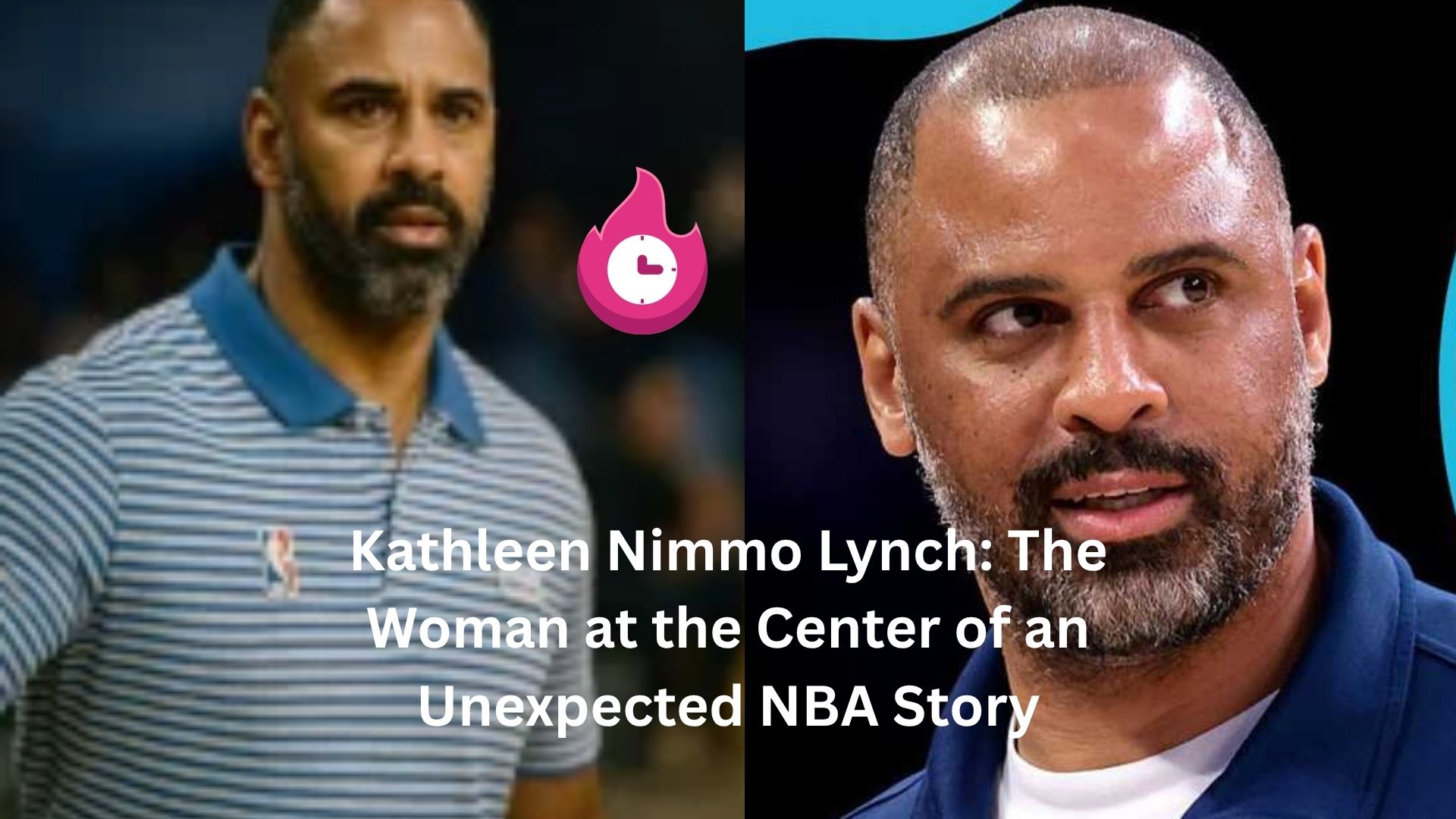
Most people had never heard of Kathleen Nimmo Lynch before 2022. She wasn’t a public figure, a celebrity, or someone regularly appearing in sports headlines. Yet within a matter of days, her name spread across social media, sports talk shows, and countless online discussions.
The reason had little to do with her professional accomplishments and everything to do with a controversy involving the Boston Celtics organization.
What makes Kathleen Nimmo Lynch’s story interesting isn’t just the sudden attention. It’s also a reminder of how quickly private individuals can become the focus of intense public scrutiny, especially in an era where rumors travel faster than facts.
Who Is Kathleen Nimmo Lynch?
Kathleen Nimmo Lynch is known for working within the Boston Celtics organization. She reportedly served as a team service manager, a role that involves handling logistics and coordinating various operational needs for players, coaches, and staff.
Behind the scenes positions like this rarely attract public attention. In professional sports, thousands of people work every day to keep organizations running smoothly, yet fans usually only know the athletes and coaches.
By all accounts, Lynch built a career within the Celtics organization and was respected professionally. She was part of the administrative structure that helps a major NBA franchise function efficiently.
Before 2022, very few basketball fans could have identified her name. That changed almost overnight.
The 2022 Boston Celtics Controversy
The turning point came in September 2022 when the Boston Celtics announced the suspension of head coach Ime Udoka.
The organization stated that Udoka had violated team policies. Almost immediately, speculation began regarding the nature of the violation.
As often happens in high-profile sports stories, social media filled the information gap before official details became available. Rumors spread rapidly, and various names were discussed online.
Among those names was Kathleen Nimmo Lynch.
The situation created a media storm. Sports reporters, fans, bloggers, and social media users attempted to piece together information from incomplete reports. Within days, Lynch found herself at the center of a story she had never publicly sought to join.
What made the situation particularly unusual was that she was not a public-facing employee. Unlike a coach, player, or executive, she had not chosen a career that involved public recognition.
How Social Media Amplified the Story
Here’s the thing about modern internet culture: once a name starts trending, controlling the narrative becomes nearly impossible.
In previous decades, a workplace controversy inside a sports organization might have remained largely internal. Today, a single rumor can generate millions of views in hours.
Many people searched for information about Kathleen Nimmo Lynch after her name began appearing online. Unfortunately, much of the content circulating at the time consisted of speculation rather than verified reporting.
A familiar pattern emerged.
One social media post referenced another. Blogs cited anonymous sources. Discussion forums repeated claims without confirmation. Before long, assumptions were being treated as established facts.
For anyone watching from the outside, it was a clear example of how quickly online attention can overwhelm an individual’s privacy.
The Human Side Often Gets Lost
When major sports stories break, the focus usually stays on teams, wins, losses, contracts, and organizational decisions.
People sometimes forget there are real individuals behind the headlines.
Imagine going to work one week as a relatively unknown employee and then finding your name being discussed across national media outlets and social platforms. That’s a level of attention most people are never prepared for.
Whether someone works in sports, healthcare, education, or finance, few expect their personal lives to become public conversation.
This aspect of the Kathleen Nimmo Lynch story resonated with many observers. Even people who followed the NBA closely found themselves reflecting on broader questions about privacy, public interest, and responsible reporting.
What Was Actually Confirmed?
One challenge surrounding the story is separating confirmed information from speculation.
The Boston Celtics publicly addressed disciplinary action involving Ime Udoka and acknowledged violations of organizational policies. However, many of the specific details discussed online were never officially confirmed by the organization.
This distinction matters.
In today’s media environment, repeated claims can begin to feel factual even when supporting evidence remains limited. Responsible reporting requires recognizing the difference between verified information and internet rumor.
As a result, much of what people believe they know about Kathleen Nimmo Lynch comes from discussions that circulated online rather than from formal public statements.
That’s one reason the topic continues to generate curiosity years later.
Why Public Interest Remains High
People continue searching for Kathleen Nimmo Lynch for several reasons.
Part of it is simple curiosity. High-profile sports controversies naturally attract attention, especially when they involve successful organizations like the Boston Celtics.
Another factor is the unusual nature of the story. Fans are accustomed to reading about players and coaches. Stories involving behind-the-scenes staff members feel different and often generate even more interest because less information is publicly available.
There’s also a broader cultural element at play.
Many people are fascinated by stories that reveal what happens behind closed doors in major organizations. Whether it’s a sports team, a large corporation, or a political institution, the public often wants to understand the internal dynamics that rarely become visible.
The Kathleen Nimmo Lynch situation intersected with all of those interests at once.
The Impact of Sudden Public Exposure
One lesson from this story involves the consequences of unexpected visibility.
For public figures, media attention is often part of the job. Athletes, actors, and politicians usually develop strategies for handling scrutiny.
Private employees typically don’t have that luxury.
When someone who has largely lived outside the spotlight suddenly becomes a trending topic, the effects can be significant. Personal privacy, family life, professional relationships, and emotional well-being can all be affected.
Let’s be honest: most people would struggle if thousands of strangers began discussing their lives online.
The internet can be remarkably powerful, but it can also be unforgiving. Information remains searchable for years, long after public interest fades.
That reality has changed the way many people think about privacy in the digital age.
Media Coverage and Ethical Questions
The Kathleen Nimmo Lynch story also sparked conversations about media ethics.
Journalists frequently face difficult decisions regarding what information should be published and what should remain private. Those decisions become even more complicated when non-public figures become connected to major news events.
Some observers argued that public interest justified extensive reporting. Others felt that private employees deserved greater protection from public exposure.
There isn’t always a simple answer.
News organizations often balance competing responsibilities: informing the public while minimizing unnecessary harm. Different outlets can reach different conclusions about where that line should be drawn.
The debates that emerged around this case reflected larger conversations taking place throughout modern media.
Life Beyond the Headlines
One interesting aspect of internet-driven controversies is how quickly public attention moves on.
A story that dominates news cycles for weeks can fade rapidly when the next major event arrives.
For the individuals involved, however, life continues long after headlines disappear.
Professional responsibilities remain. Families still need attention. Daily routines eventually return, even if public interest lingers online.
In many ways, that’s the part of stories like this that receives the least coverage. News focuses on moments of controversy, while ordinary life afterward rarely attracts the same level of attention.
Yet that’s often where the real story exists.
What the Kathleen Nimmo Lynch Story Teaches Us
Looking back, the story surrounding Kathleen Nimmo Lynch highlights several realities of modern life.
First, privacy has become increasingly fragile. A person can move from anonymity to widespread recognition almost instantly, even without seeking public attention.
Second, social media can dramatically accelerate both information and misinformation. The speed of online discussion often exceeds the pace of verified reporting.
Third, it’s worth remembering that real people exist behind every headline. Public curiosity is natural, but empathy remains important.
When reading stories involving individuals who never intended to become public figures, a little perspective goes a long way.
Final Thoughts
Kathleen Nimmo Lynch became widely known not because she pursued fame, but because she found herself connected to one of the most discussed NBA controversies of recent years. The sudden attention transformed an otherwise private professional into a subject of intense public interest.
Years later, the story continues to attract searches and discussion, largely because it sits at the intersection of sports, media, privacy, and internet culture. While many details remain the subject of speculation, the broader lessons are clear.
The episode serves as a reminder that behind every trending topic is a real person, and in an age of constant connectivity, the line between public and private life can disappear far faster than most people imagine.
