



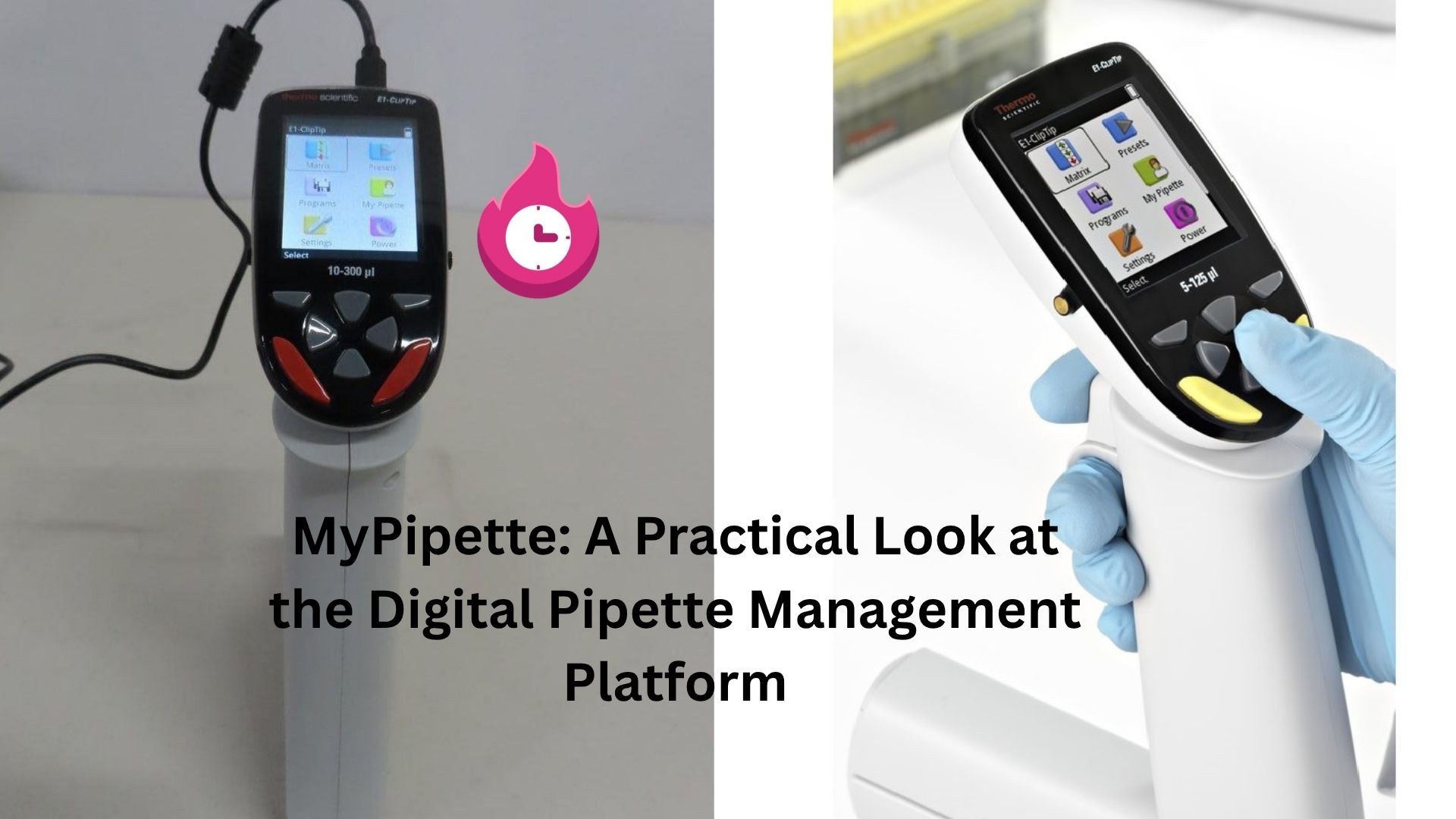
Anyone who has spent time in a laboratory knows that pipettes are easy to overlook until something goes wrong.
A result seems slightly off. A quality check fails. A calibration record can’t be found when it’s needed most. Suddenly, a small handheld tool becomes the center of attention.
That’s where MyPipette enters the picture.
Rather than being another complicated laboratory system, MyPipette focuses on a very specific challenge: helping labs track, manage, maintain, and document their pipettes efficiently. It may sound like a narrow task, but anyone responsible for laboratory compliance understands how much time can disappear into equipment records, service schedules, and calibration documentation.
The interesting part is that MyPipette turns what was traditionally a paperwork-heavy process into something far more manageable. For busy laboratories, that can make a noticeable difference in daily operations.
Table of Contents
- What Is MyPipette?
- Why Pipette Management Matters More Than People Think
- How MyPipette Works in Everyday Laboratory Life
- Keeping Calibration Records Organized
- The Benefits for Different Types of Laboratories
- Reducing Human Error Through Better Tracking
- A Day in the Life With MyPipette
- Common Challenges and Limitations
- Why Digital Equipment Management Is Becoming Standard
- Final Thoughts on MyPipette
What Is MyPipette?
MyPipette is a digital platform designed to help laboratories manage pipettes and related service information. Instead of relying on spreadsheets, printed certificates, filing cabinets, or handwritten notes, users can access equipment records through a centralized system.
The platform typically allows laboratory personnel to track calibration history, maintenance schedules, service dates, certifications, and equipment status.
Think about a lab with dozens or even hundreds of pipettes. Keeping track of each tool manually becomes difficult surprisingly fast. One instrument might be due for calibration next week, while another was serviced three months ago. Without a reliable system, details can slip through the cracks.
MyPipette aims to keep everything visible and organized in one place.
For many labs, that’s the main appeal.
Why Pipette Management Matters More Than People Think
At first glance, a pipette seems simple. Press a button, transfer liquid, repeat.
Reality is different.
Even tiny measurement inaccuracies can affect research findings, pharmaceutical production, quality control testing, and clinical diagnostics. Precision matters. Sometimes a fraction of a microliter can influence results.
Imagine a laboratory technician preparing samples for analysis. The pipette appears perfectly fine, but its calibration has drifted slightly over time. The error might not be noticeable immediately. Yet over dozens or hundreds of tests, those small inaccuracies can create larger problems.
That’s why regular maintenance and calibration are so important.
The challenge isn’t understanding the importance. The challenge is managing the process consistently.
MyPipette helps solve that organizational problem by creating a clearer picture of equipment status across an entire laboratory.
How MyPipette Works in Everyday Laboratory Life
Here’s the thing: the value of any management platform depends on whether people actually use it.
Many software systems look impressive during demonstrations but become frustrating in daily practice.
What makes equipment tracking tools useful is simplicity.
A laboratory manager might log into MyPipette and immediately see which instruments require attention. Instead of searching through multiple spreadsheets or emails, relevant information is available from a single dashboard.
Service histories become easier to review.
Calibration certificates become easier to locate.
Equipment inventories become easier to maintain.
Now imagine an audit situation. Auditors request calibration records for several pipettes used in a specific testing process. Without organized records, employees may spend hours gathering documentation.
With a centralized system, locating those records becomes significantly faster.
That convenience alone can save a surprising amount of time.
Keeping Calibration Records Organized
One of the biggest headaches in laboratory management involves documentation.
Everyone agrees records should be maintained carefully. Yet documentation often becomes scattered across folders, computers, email threads, and physical storage locations.
Over time, retrieving information becomes increasingly difficult.
MyPipette addresses this issue by creating a structured environment for equipment-related records.
Instead of wondering where a certificate was saved six months ago, users can access documentation linked directly to the specific instrument.
That sounds simple because it is.
Simple solutions are often the most valuable ones.
A laboratory might have multiple team members responsible for equipment oversight. When records are centralized, information remains accessible regardless of who originally uploaded or managed it.
Consistency improves naturally.
The Benefits for Different Types of Laboratories
Not every laboratory operates the same way.
A university research lab has different priorities than a pharmaceutical manufacturing facility. Clinical laboratories face different regulatory expectations compared to environmental testing organizations.
Yet they share one common requirement: reliable equipment.
MyPipette can support a variety of laboratory environments because equipment management is a nearly universal challenge.
Research laboratories benefit from improved organization.
Quality assurance teams gain better visibility into equipment status.
Compliance-focused organizations appreciate having accessible documentation when inspections occur.
Even smaller laboratories can see advantages.
People sometimes assume management systems are only valuable for large organizations. In reality, small teams often benefit just as much because they have fewer resources available for administrative tasks.
When one person handles multiple responsibilities, efficient tracking becomes especially important.
Reducing Human Error Through Better Tracking
Let’s be honest.
Most equipment management mistakes don’t happen because people are careless.
They happen because people are busy.
A calibration reminder gets overlooked.
A maintenance date gets recorded incorrectly.
A document ends up stored in the wrong location.
These are normal human mistakes.
Digital tracking systems help reduce such errors by providing structured processes and automated visibility. Instead of relying entirely on memory, users have a system that supports routine equipment management.
Imagine trying to remember service dates for fifty different pipettes.
Now imagine having those dates automatically organized and accessible whenever needed.
The difference is obvious.
Technology doesn’t eliminate human involvement, but it can make oversight much easier.
A Day in the Life With MyPipette
Picture a laboratory supervisor starting the morning.
Before testing begins, they check equipment status through MyPipette. A quick review shows several pipettes approaching scheduled calibration dates next month.
No surprises.
No last-minute scrambling.
Later that day, a technician needs documentation for a specific instrument used during a validation process. Instead of contacting multiple departments or searching archived files, the information is readily available.
In the afternoon, management reviews laboratory readiness before an upcoming audit.
Again, documentation can be verified quickly.
None of these tasks are particularly dramatic. That’s actually the point.
Good management systems make routine work feel routine.
They reduce friction.
They remove unnecessary searching.
They help people focus on laboratory work instead of administrative detective work.
Common Challenges and Limitations
No platform is perfect.
It’s worth acknowledging that software alone doesn’t solve every laboratory management issue.
Successful implementation still depends on accurate data entry and consistent use.
If records aren’t updated properly, even the best system loses effectiveness.
Training also matters.
Employees need to understand how information should be entered, reviewed, and maintained. A digital platform can provide structure, but organizations still need clear internal procedures.
Another reality is that some laboratories may initially resist moving away from familiar paper-based systems.
Change always creates a learning curve.
Yet many organizations discover that once digital processes become part of daily operations, returning to manual methods feels unnecessarily difficult.
Why Digital Equipment Management Is Becoming Standard
The broader trend across laboratories is clear.
Digital record management continues to replace traditional paper-heavy approaches.
Several factors are driving this shift.
Regulatory expectations continue evolving.
Data accessibility has become increasingly important.
Remote access and centralized information management provide practical advantages that paper records simply can’t match.
Think about how many industries have transitioned toward digital documentation over the past decade.
Healthcare.
Finance.
Education.
Manufacturing.
Laboratories are following a similar path.
Equipment management platforms like MyPipette fit naturally into that larger movement toward improved visibility and operational efficiency.
The goal isn’t technology for the sake of technology.
The goal is making critical information easier to manage and easier to trust.
Final Thoughts on MyPipette
MyPipette addresses a challenge that many laboratories encounter but don’t always discuss openly: keeping equipment records organized and accessible without creating endless administrative work.
Pipettes may seem like small tools, yet they play a major role in laboratory accuracy and reliability. Managing them effectively requires more than occasional calibration reminders and scattered spreadsheets.
A centralized platform helps create structure around equipment maintenance, service records, and compliance documentation.
For laboratory professionals, that structure can translate into fewer missed deadlines, quicker access to records, and greater confidence during audits and inspections.
Sometimes the most useful systems aren’t the ones doing flashy things. They’re the ones quietly keeping important processes running smoothly behind the scenes.
MyPipette fits that description rather well. It helps laboratories stay organized, maintain accountability, and focus more attention on the work that truly matters.
