




Aluminum is a widely used metal, found in everything from soda cans and kitchen foil to airplanes and car parts. But have you ever wondered, is aluminum magnetic? If you’ve ever held a magnet up to an aluminum can and noticed it doesn’t stick, you may be curious why. You’re not alone. This question pops up often, especially among students, science enthusiasts, and DIY tinkerers. So, let’s dive into the science behind aluminum and its surprising relationship with magnets.
What Does Magnetic Mean?
To understand whether aluminum is magnetic, we first need to understand what magnetic actually means. A material is considered magnetic if it can be attracted by a magnet or can become magnetized itself. This usually happens when the material contains iron, nickel, or cobalt—elements that have specific arrangements of electrons that allow magnetic fields to align in a particular way.
When you bring a magnet close to a magnetic material, the atoms in the material align with the magnetic field, creating a force of attraction. That’s why a refrigerator magnet sticks to a steel surface. However, not all metals or materials react this way. Some don’t interact with magnets at all, and others behave in more complex ways depending on external conditions like temperature or the strength of the magnetic field.
Is Aluminum Magnetic or Not?
The simple answer is no, aluminum is not magnetic in the way iron or steel is. If you try to stick a magnet to a piece of aluminum foil or an aluminum can, nothing happens. There’s no pull, no stickiness, no reaction—just silence.
But don’t be too quick to assume aluminum has no interaction with magnets at all. While it’s true that aluminum is classified as a “non-magnetic metal”, it does have some interesting properties when exposed to strong magnetic fields. Under the right conditions, aluminum can actually react in surprising ways, which we’ll explore in a moment.
So, is aluminum magnetic or nonmagnetic? Technically, aluminum is nonmagnetic, but it belongs to a special category called paramagnetic materials, which means it reacts weakly to magnetic fields but doesn’t retain any magnetic properties once the field is removed.
Why Doesn’t Aluminum Stick to a Magnet?
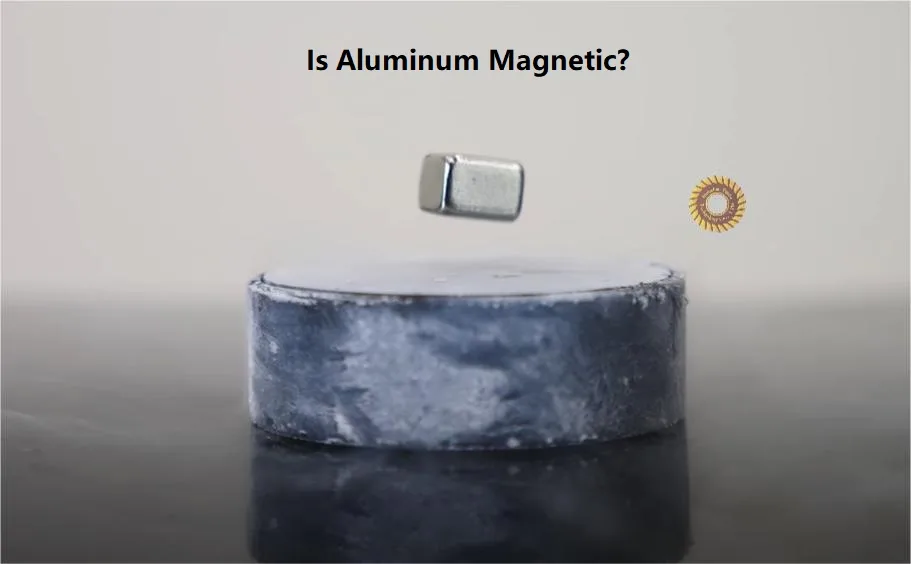
Aluminum doesn’t stick to a magnet because it lacks unpaired electrons and doesn’t have a strong magnetic domain structure like iron or nickel. The internal structure of aluminum’s atoms doesn’t support the alignment needed for magnetic attraction. This is why, even if you use a very strong neodymium magnet, the aluminum will still refuse to cling.
What Makes Something Magnetic?
To be magnetic, a material must have unpaired electrons in its atomic structure and a way for those electrons to align uniformly when exposed to a magnetic field. This alignment creates tiny magnetic fields within the material, which combine to form a larger, visible magnetic effect. Materials like iron, cobalt, and nickel have this kind of atomic structure, which is why they’re strongly magnetic.
Aluminum, on the other hand, has paired electrons that cancel each other out, so there’s no strong magnetic force being generated. That’s why it’s considered nonmagnetic.
Is Aluminum a Metal?
Yes, aluminum is definitely a metal, and in fact, it’s one of the most abundant metals in the Earth’s crust. It’s lightweight, corrosion-resistant, and highly conductive, which is why it’s used in airplanes, electrical wiring, and soda cans. However, just being a metal doesn’t automatically make something magnetic. That’s a common myth. Not all metals are magnetic—and aluminum is a perfect example.
Can Magnets Ever Affect Aluminum?
Surprisingly, yes! While aluminum doesn’t stick to a magnet, it can still be affected by a magnetic field, especially a moving or changing one. If you drop a strong magnet through an aluminum pipe, it falls very slowly. This happens because of a phenomenon called electromagnetic induction. As the magnet moves, it generates tiny currents (called eddy currents) in the aluminum. These currents create their own magnetic field that opposes the falling magnet, slowing it down.
So while aluminum isn’t magnetic in the traditional sense, it’s definitely not “immune” to magnetism either. It just reacts in a different way.
When Does Aluminum React to Magnets?
Aluminum reacts to magnets when the magnetic field is changing or in motion. This is based on the principles of Faraday’s Law of Electromagnetic Induction. When a magnet moves through a conductor like aluminum, it creates eddy currents, and these currents generate a magnetic field in response.
This interaction is strong enough to repel or slow down the magnet’s motion. Engineers use this in magnetic braking systems, like in roller coasters or high-speed trains, where magnets interact with aluminum plates to create frictionless, wear-free brakes.
This also explains why aluminum can feel some resistance in the presence of a strong, moving magnet, even though it doesn’t actually stick to it.
Is Aluminum Magnetic in Water or Air?
The environment—whether it’s water or air—doesn’t really change the magnetic properties of aluminum. Aluminum remains nonmagnetic regardless of whether it’s submerged in water or suspended in air.
That said, the movement of magnetic fields in water can also generate eddy currents in aluminum, just like in air. So, in both air and water, if a strong magnet moves past or near aluminum, you’ll see the same kind of reactive effects due to induced magnetic fields.
So, if you were wondering is aluminum magnetic in water, the answer is still no—but it can still respond in certain experimental setups where magnetic fields are involved.
Which Metals Are Really Magnetic?
To understand aluminum better, it helps to compare it with metals that are actually magnetic. Only a handful of metals are strongly magnetic, and they usually contain iron, nickel, or cobalt—the classic magnetic trio.
Magnetic vs Non-Magnetic Metals
Let’s break it down:
Magnetic Metals (Ferromagnetic):
- Iron
- Nickel
- Cobalt
- Steel (if it contains iron)
- Some rare earth metals (like gadolinium)
Non-Magnetic Metals:
- Aluminum
- Copper
- Brass
- Gold
- Silver
- Lead
- Tin
- Zinc
So, while aluminum shares the “metal” label with iron or steel, it behaves very differently in a magnetic field.
Is Steel Magnetic Like Iron?
Steel is mostly made of iron, which is magnetic. So, yes—steel is generally magnetic, especially if it’s carbon steel. However, some stainless steels are made with austenitic structures and added elements like chromium and nickel, which can reduce or eliminate magnetic properties. That’s why not all stainless steel fridges hold magnets equally well.
Can You Make Aluminum Magnetic?
Technically, you can’t make aluminum magnetic in the traditional sense because it doesn’t have the internal structure needed to support magnetism. However, researchers have experimented with modifying aluminum’s atomic structure under extreme lab conditions—like exposing it to intense laser beams or super-strong magnetic fields—to create temporary magnetism.
These are interesting for scientific study, but not useful for practical, everyday applications. So, for your home or classroom experiments, aluminum will remain nonmagnetic no matter what.
Everyday Uses of Aluminum and Magnets
Even though aluminum isn’t magnetic, it still works alongside magnets in lots of useful applications. For example, in recycling centers, machines use strong magnets to separate magnetic metals (like iron) from nonmagnetic ones (like aluminum). This helps streamline the sorting process.
In electric motors and generators, aluminum is often used as a conductor, while magnets generate the magnetic fields needed to produce electricity. The nonmagnetic nature of aluminum makes it ideal in electronics, where magnetic interference can be a problem.
And as we mentioned earlier, magnetic braking systems rely on the way aluminum responds to moving magnetic fields, even though it’s not magnetic itself.
The Bottom Line
So, is aluminum magnetic? The answer is no, aluminum is not magnetic in the traditional sense. It won’t stick to magnets, and it doesn’t generate a magnetic field by itself. However, aluminum is paramagnetic, meaning it reacts weakly to magnetic fields and can show some cool effects when those fields move or change.
Understanding the difference between magnetic and non-magnetic metals helps you better appreciate how materials behave in science and technology. While aluminum won’t replace iron in your refrigerator magnets anytime soon, it’s still a metal full of surprises—especially when you throw magnets into the mix!
