



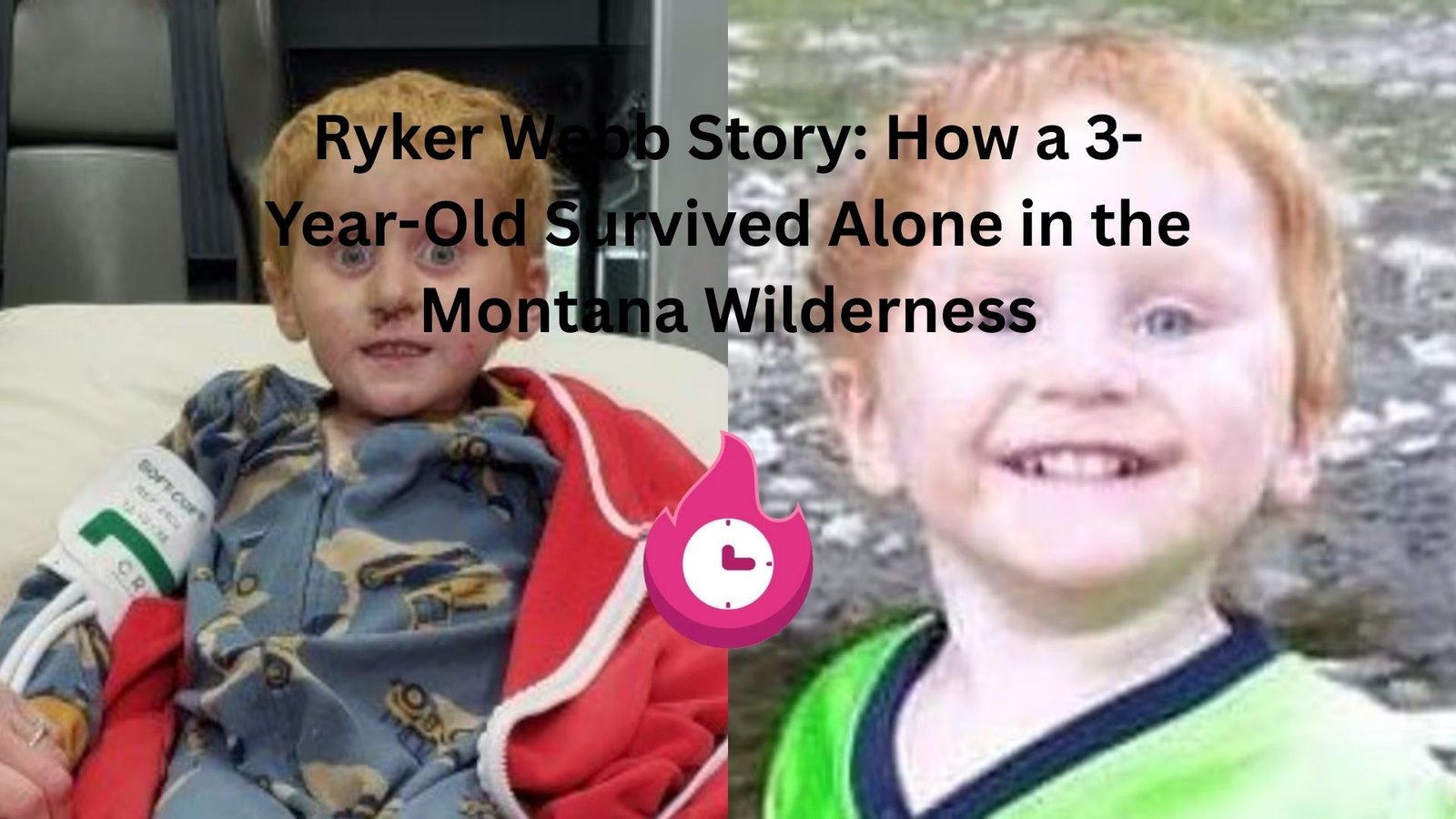
Some stories grab you because they feel almost impossible. The Ryker Webb story is one of those.
A three-year-old boy disappears. The search stretches on. The wilderness is vast, cold, and unforgiving. And then—against the odds—he’s found alive.
If you’ve ever taken your eyes off a child for even a few seconds and felt that jolt of panic, you already understand why this story hit so hard. It’s not just about survival. It’s about fear, community, instinct, and the strange resilience that sometimes shows up when you least expect it.
The Day Ryker Went Missing
In June 2022, Ryker Webb wandered away from his home in rural Montana. His family lived near Bull Lake, a remote area surrounded by thick forest, brush, and wildlife. This wasn’t a neighborhood with sidewalks and streetlights. It was real wilderness. The kind where you don’t want to be alone, especially not as a toddler.
Ryker was last seen playing outside. Then he was gone.
No dramatic moment. No warning. Just the sickening realization that he wasn’t there anymore.
Anyone who’s been around kids knows how fast that can happen. You turn to grab something from the car. You answer a quick question. You assume they’re right behind you. And suddenly the world feels very large and very unsafe.
His family called authorities immediately. And that’s when the search began.
A Massive Search in Tough Conditions
Search and rescue teams mobilized quickly. Local law enforcement, volunteers, K9 units, and even helicopters joined the effort. The terrain wasn’t friendly. Dense woods. Tall grass. Uneven ground. Creeks and ponds scattered through the area.
And there was another factor: wildlife.
Montana isn’t just trees and quiet trails. It’s bear country. Mountain lion territory. When a toddler is missing in that environment, every hour feels heavier than the last.
Temperatures dropped overnight. That’s what worried people the most. A three-year-old doesn’t have the same ability to regulate body temperature as an adult. Hypothermia becomes a real threat, even in early summer.
As the hours passed, hope started battling reality.
Let’s be honest—most people braced themselves for bad news.
Two Long Nights
Ryker was missing for nearly two full days.
Think about that. Two nights alone in the wilderness.
No shelter. No supplies. No adult guidance.
If you’ve ever gone camping and realized you forgot a flashlight or an extra layer, you know how vulnerable you can feel. Now imagine being three years old.
Search crews worked around the clock. Volunteers combed through brush. Helicopters scanned from above. Dogs tracked scents through thick undergrowth.
But the woods are big. And small bodies are hard to spot from the air.
The uncertainty was brutal. For the family. For the searchers. For the community following updates and refreshing news feeds.
And then, on the second day, everything changed.
Found in a Shed
Ryker was discovered about two miles from his home.
He was inside a shed.
A man who lived in the area had gone to check his property and found the little boy taking shelter there. Cold. Hungry. Tired. But alive.
It almost sounds simple when you say it that way. A shed. A small building. A bit of luck.
But that shed may have saved his life.
It provided protection from the wind and nighttime temperatures. It gave him some form of shelter from animals. It reduced his exposure.
When search teams reached him, reports said he was in good spirits. Imagine that. After two days alone.
Sometimes kids surprise us. They don’t always react the way adults would. They adapt in ways that feel almost instinctual.
How Did He Survive?
This is the question everyone asked.
How does a toddler survive alone in the wilderness for two nights?
There’s no single dramatic explanation. It seems to be a combination of factors.
First, the weather, while cold at night, wasn’t freezing. That matters. A few degrees can be the difference between survival and tragedy.
Second, Ryker found shelter. That shed acted as a buffer against the elements.
Third—and this is important—children don’t panic the same way adults do. A three-year-old might not fully grasp the danger. That can reduce stress-driven decisions that make situations worse.
Now, that’s not to say it wasn’t dangerous. It absolutely was. But sometimes survival is less about grand strategy and more about small, lucky breaks stacked together.
A dry place to sit. A bit of protection. Not wandering into deeper hazards.
It’s not a blueprint. It’s a miracle threaded through practical circumstances.
The Community Response
One of the most powerful parts of the Ryker Webb story wasn’t just the survival. It was the response.
Small communities show up.
Neighbors volunteered. People who didn’t know the family personally still stepped in to search. Helicopters flew overhead. Law enforcement coordinated tirelessly. Social media spread awareness.
There’s something deeply human about that. When a child goes missing, differences disappear. Politics fade. Schedules pause.
Everyone just wants the same thing.
If you’ve ever seen a neighborhood rally around someone in crisis, you know the feeling. Food appears. Flashlights come out. People knock on doors and ask, “What can I do?”
That collective effort matters. Even when the outcome is uncertain, showing up matters.
In this case, it ended with relief instead of heartbreak.
The Emotional Aftermath
Being found is only part of the story.
What comes after something like this?
For the family, there’s overwhelming gratitude. Relief so intense it probably feels unreal. And then, likely, a wave of “what if” thoughts.
That’s natural.
Parents replay moments. Could we have done something differently? Should we have noticed sooner? Those questions can be heavy.
But here’s the thing: toddlers are quick. Rural properties aren’t fenced playgrounds. Accidents happen in seconds, not minutes.
Blame doesn’t help much after the fact. Learning does.
And for many parents watching this story unfold, it was a wake-up call.
What This Story Teaches Without Preaching
No one needs a lecture after hearing about a lost child. But stories like this quietly remind us of a few things.
Supervision in rural or wooded areas is different from suburban life. The risks are different. Distance feels smaller than it is. Two miles in open land doesn’t sound far—until you walk it through brush and uneven ground.
It also highlights the importance of community awareness. In remote areas especially, neighbors knowing each other and staying alert can make a huge difference.
And maybe most importantly, it shows how quickly situations can escalate. Not to create paranoia. Just awareness.
You don’t need to live in Montana to take something from this. Even a crowded park can become overwhelming if a child wanders.
A simple habit—visual check-ins every few minutes—can be powerful. It sounds obvious. But we all get distracted. Phones buzz. Conversations pull us in.
Sometimes prevention is just shortening the gap between glances.
The Media Attention
The Ryker Webb story spread quickly beyond Montana. National news outlets picked it up. Social media amplified it.
Why did it resonate so widely?
Because it hits a universal nerve. Vulnerability. Fear. Hope.
And let’s be honest—good news travels differently when it’s rare. We’re used to tragic endings in missing child cases. When a story breaks that pattern, people cling to it.
It becomes a reminder that not every crisis ends in loss.
That doesn’t make it less serious. It just makes it human.
The Quiet Strength of Children
There’s something else worth noticing here.
Kids are tougher than we often assume.
That doesn’t mean we take risks lightly. But children sometimes demonstrate a kind of resilience that feels almost instinctive. They curl up when they’re cold. They seek small enclosed spaces for comfort. They conserve energy without consciously deciding to.
Think about how a toddler reacts when they’re overwhelmed. They sit down. They stay put. They cry, maybe. But they don’t necessarily sprint deeper into danger.
In Ryker’s case, finding that shed and staying there likely made all the difference.
It wasn’t calculated survival. It was simple shelter.
Sometimes simple is enough.
Why This Story Stays With Us
The Ryker Webb story isn’t just about a missing child found alive.
It’s about the thin line between ordinary life and crisis.
One moment a child is playing outside. The next, helicopters are in the sky.
It reminds us how fragile routines can be. But it also reminds us how strong communities can be. And how unpredictable outcomes sometimes lean toward hope.
There’s something grounding about that.
We can’t control everything. No parent can create a risk-free world. But we can stay present. We can prepare reasonably. We can know our surroundings.
And we can appreciate the good endings when they come.
A Final Thought
Stories like this don’t fade quickly.
They stick because they tap into something universal—the instinct to protect, the fear of losing, the relief of reunion.
Ryker Webb survived two nights alone in the Montana wilderness. That’s the headline. But underneath it is a deeper truth: sometimes survival is a mix of luck, instinct, shelter, and a community that refuses to give up.
If there’s a takeaway, it’s not fear. It’s awareness.
Watch a little closer. Appreciate your people a little more. And remember that even in wide, uncertain spaces, hope can still show up in the form of a small shed in the woods.
