



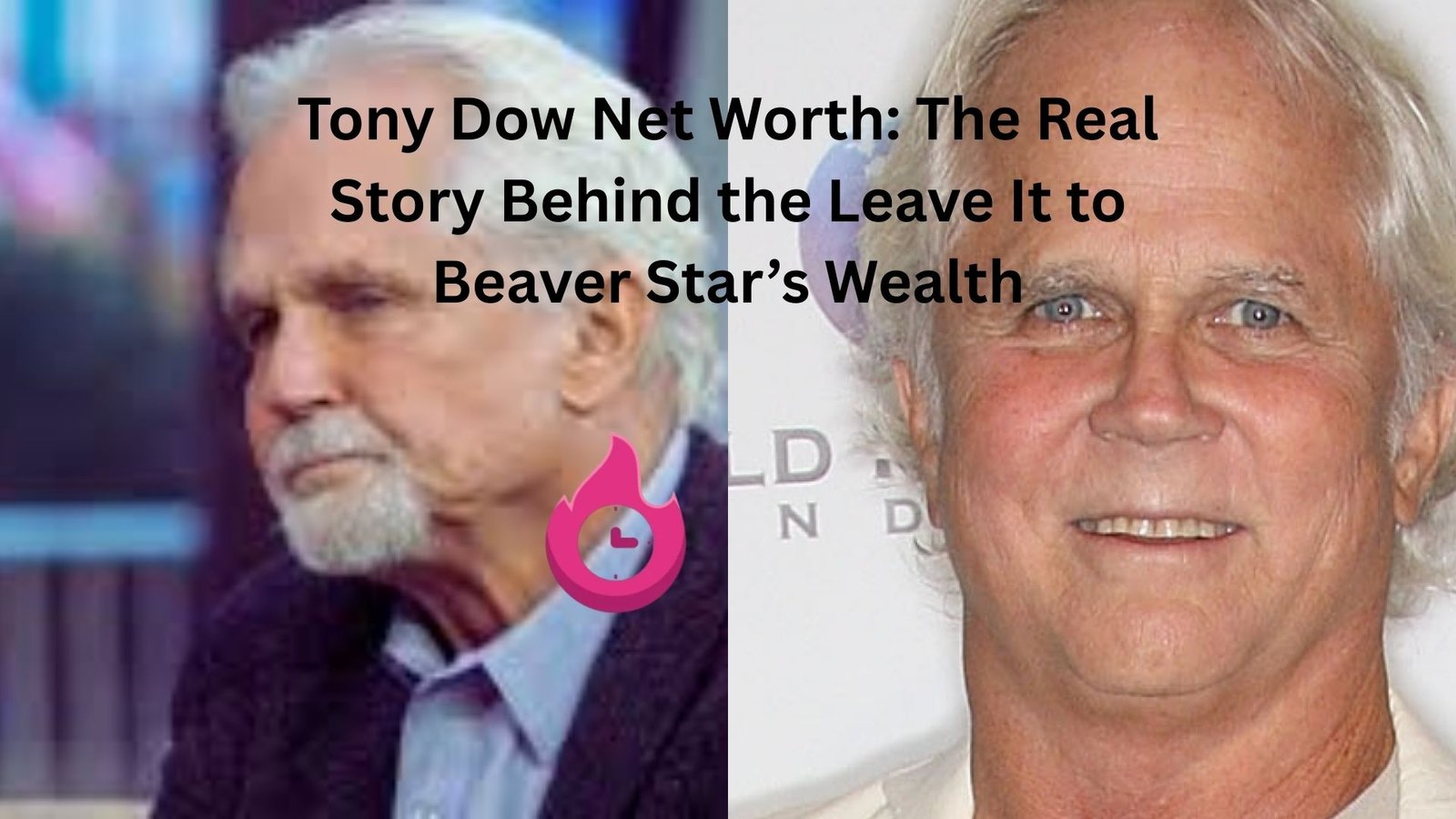
When people hear Tony Dow’s name, most instantly picture Wally Cleaver — the polite, all-American big brother from Leave It to Beaver. The show is stitched into TV history. But once the nostalgia fades, a practical question pops up: what was Tony Dow’s net worth, really? And how did a child star from the late 1950s manage his finances across a lifetime in Hollywood?
The answer isn’t just a number. It’s a story about steady work, smart pivots, quiet reinvention, and the complicated reality of growing up famous.
What Was Tony Dow’s Net Worth?
At the time of his death in 2022, Tony Dow’s net worth was estimated to be around $4 million.
Now, that figure might surprise some people. When you think “iconic television show,” you might imagine tens of millions. But let’s be honest — television contracts in the late 1950s were nothing like today’s streaming mega-deals. Child actors especially didn’t have the negotiating power stars do now.
Dow earned good money during Leave It to Beaver (which ran from 1957 to 1963), but residuals back then weren’t structured the way they are today. The long-term financial upside of reruns wasn’t nearly as generous as what modern actors receive.
Still, $4 million reflects a lifetime of consistent work — and more importantly, adaptability.
The Early Money: Leave It to Beaver Years
Tony Dow was just 12 years old when he landed the role of Wally Cleaver. He didn’t come from a showbiz family. In fact, he was a competitive swimmer before acting entered the picture.
That’s important. He wasn’t a child pushed into the industry. He auditioned almost on a whim.
The show became a massive hit. For six seasons, Dow worked steadily. For a young actor in the 1950s, that meant reliable income, national exposure, and stability most kids his age couldn’t imagine.
But here’s the thing about child stardom: it rarely guarantees lifelong wealth.
Unlike today’s blockbuster franchises, Leave It to Beaver was a network television series with traditional salary structures. There were no massive backend profit shares. No streaming bonuses. No billion-dollar merchandising empire feeding the cast.
Dow earned well. He just didn’t earn modern-star well.
The Reality After the Spotlight
When Leave It to Beaver ended in 1963, Dow was only 18.
That’s a tricky age. Not quite a child. Not fully established as an adult actor.
Like many former child stars, he struggled to shake the image that made him famous. Casting directors saw Wally Cleaver. Audiences saw Wally Cleaver. Reinvention wasn’t easy.
Work slowed down.
Dow took on guest roles in shows like My Three Sons, Dr. Kildare, and Adam-12. He stayed visible but never became a breakout adult leading man. The steady TV checks helped, but they weren’t blockbuster paydays.
Around this time, Dow also faced personal challenges, including battles with depression. He’s spoken openly about it. That honesty matters. Financial success isn’t just about income — it’s about navigating life while staying functional and productive.
He didn’t spiral into financial ruin. He didn’t disappear entirely either. Instead, he adapted.
Reinvention Behind the Camera
Here’s where Tony Dow’s financial story gets more interesting.
In the 1980s and 1990s, he transitioned into directing and producing. That’s not the flashy move that grabs headlines, but it’s often the smart one.
He directed episodes of popular shows like:
- Coach
- Harry and the Hendersons
- Babylon 5
- Star Trek: Deep Space Nine
Directing television isn’t usually celebrity-level glamorous, but it’s steady, professional work. And steady work builds wealth quietly.
Think about it. One directing job leads to another. Industry reputation grows. You’re not dependent on casting calls anymore — you’re the one running the set.
That shift likely played a significant role in stabilizing and growing Tony Dow’s net worth over the years. It diversified his income beyond acting.
And diversification is underrated when we talk about celebrities.
The Return of Wally Cleaver
In 1983, The New Leave It to Beaver rebooted the franchise. Dow reprised his role as Wally, now an adult.
Nostalgia sells. It always has.
The revival ran for several seasons and introduced a new generation to the Cleaver family. While it didn’t reach the cultural heights of the original series, it provided steady work again — and likely better compensation terms than the 1950s contract.
That matters.
When an actor revisits an iconic role decades later, there’s leverage involved. The brand has history. The fan base is built-in. That kind of position typically comes with improved financial terms.
It wasn’t a blockbuster payday. But it added to the long-term picture.
A Surprising Turn: Sculpture and Fine Art
Now here’s something many casual fans don’t know.
Tony Dow became a sculptor.
Not as a hobby. As a serious artist.
His abstract bronze sculptures were exhibited in galleries and collected by buyers who respected his craft. He once said creating art gave him peace — something acting didn’t always provide.
Financially, this was another smart pivot.
Fine art can be unpredictable, but it can also be lucrative, especially when the artist has name recognition. Dow wasn’t just “some sculptor.” He was Tony Dow — a recognizable public figure whose art carried both intrinsic and celebrity value.
Picture a collector at a gallery. They admire the piece on its own merit. Then they learn who made it. That connection can push a sale across the line.
Over time, those sales contributed to his overall net worth. Maybe not in explosive numbers, but in meaningful additions.
Real Estate and Personal Life
While Tony Dow wasn’t known for flashy real estate empires or headline-making purchases, he lived comfortably in California for most of his life.
Living in Southern California isn’t cheap. Maintaining a home there signals financial stability.
Unlike some celebrities who chase high-risk investments or extravagant lifestyles, Dow lived relatively modestly. No tabloid drama about bankruptcies. No public financial collapses.
Sometimes, maintaining wealth is about not losing it.
He married twice and had one son. By all accounts, his later years were grounded and focused on creative work rather than Hollywood excess.
That quiet financial management probably helped preserve his estimated $4 million net worth.
Why His Net Worth Wasn’t Higher
Let’s address the elephant in the room.
For someone attached to such a legendary TV show, why wasn’t Tony Dow’s net worth $20 million or more?
A few reasons.
First, era matters. Television contracts in the 1950s and early 1960s weren’t built for long-term wealth. Residual structures were limited.
Second, he didn’t transition into blockbuster films or high-paying prime-time lead roles as an adult.
Third, he wasn’t chasing fame at all costs. Some actors constantly reinvent themselves in mainstream roles to maximize earnings. Dow chose creative fulfillment and steady work instead.
That decision likely capped his earning ceiling — but it also probably improved his quality of life.
And honestly, there’s something admirable about that.
Financial Lessons from Tony Dow’s Life
Looking at Tony Dow’s net worth isn’t just about celebrity curiosity. There are practical takeaways here.
Early success doesn’t guarantee lifelong wealth. You have to evolve.
Relying on one income stream — even a wildly successful one — is risky. Dow moved into directing. Then sculpture. He kept creating.
Living below your means preserves stability. He didn’t become a cautionary tale of overspending.
Mental health matters. Dow’s openness about depression shows that financial success and personal well-being don’t always move in sync. Protecting both is crucial.
If you zoom out, his career looks less like a meteoric rise and more like a steady, adaptable journey.
And sometimes, steady wins.
The Final Chapter
Tony Dow passed away in July 2022 at age 77 after battling cancer. News of his death sparked an outpouring of affection from fans who grew up watching him.
People remembered Wally Cleaver — the decent, dependable older brother who always seemed to do the right thing.
Behind that character was a man who navigated Hollywood’s unpredictability for over six decades.
His estimated $4 million net worth reflects a career built not on explosive fame, but on consistency. On showing up. On reinventing quietly. On doing meaningful work without chasing spectacle.
