



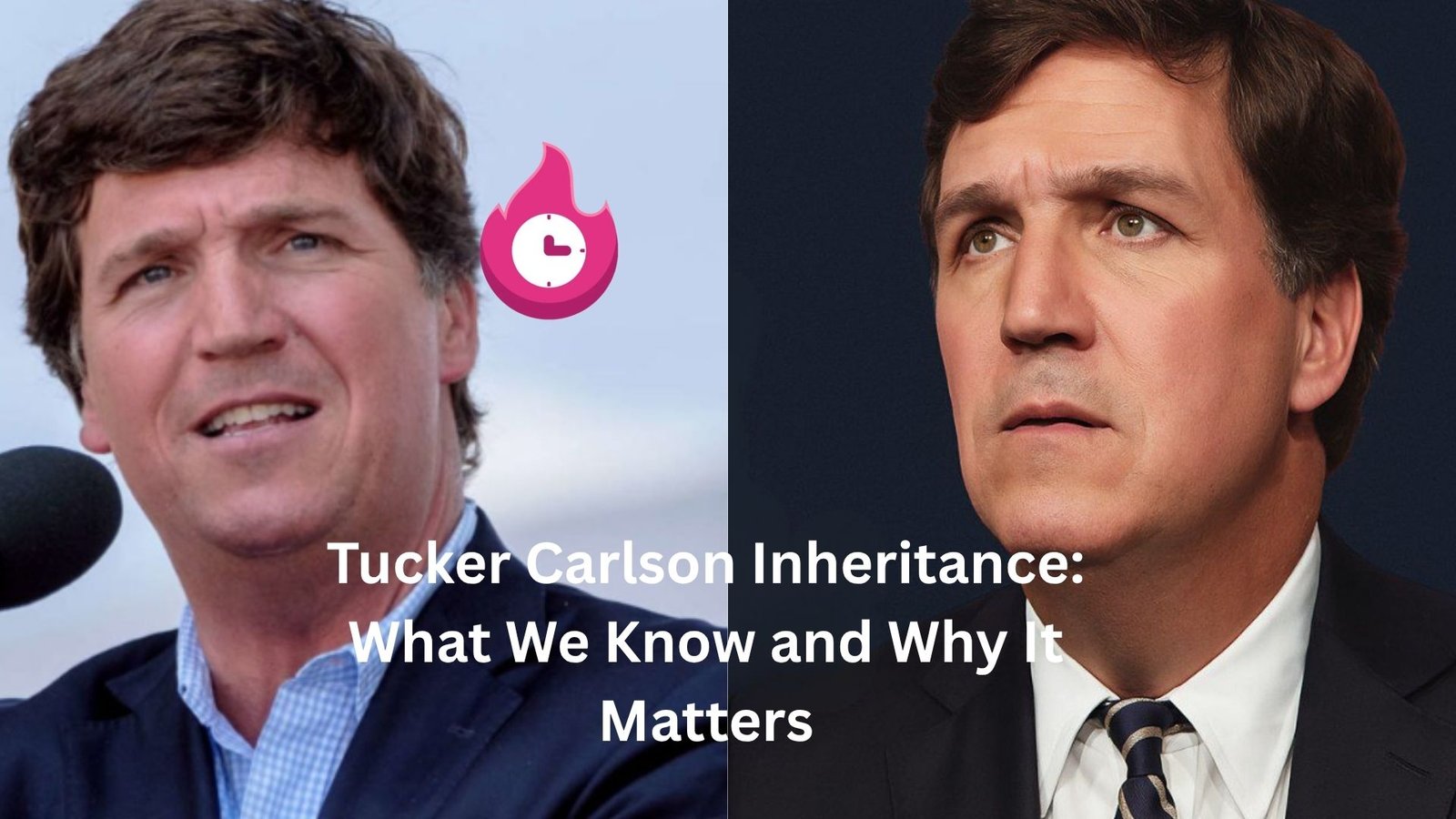
Money stories get people curious. Add a polarizing media figure like Tucker Carlson into the mix, and the curiosity doubles. Not just because of the numbers, but because of what those numbers say about power, influence, and the long arc of privilege in America.
Tucker Carlson’s inheritance isn’t just a footnote in his biography. It’s part of the foundation that helped shape his path—from elite schools to cable news stardom. And if you’re trying to understand how someone ends up with that kind of platform and confidence, it’s worth taking a closer look.
A Family With Deep Roots
Carlson didn’t come out of nowhere. His family background is layered, and it goes beyond simple wealth.
His father, Richard Warner Carlson, had a long and varied career—journalist, diplomat, and even director of Voice of America. That alone placed Tucker in proximity to media and politics from a young age. Not exactly the average childhood dinner conversation.
But the more talked-about side of the story comes from his mother’s family. Tucker Carlson’s mother, Lisa McNear Lombardi, was an heiress to the Swanson frozen food fortune. Yes, that Swanson—the TV dinners that basically defined mid-century convenience eating in America.
Now here’s where it gets interesting. Carlson’s parents divorced when he was young, and he and his brother were raised by their father and stepmother. Reports suggest that Carlson and his brother were largely estranged from their biological mother after the divorce. When she passed away in 2011, she left her estate—not to her sons—but to other parties.
So despite the headlines you sometimes see, Tucker Carlson didn’t directly inherit the Swanson fortune in the way people might assume. That narrative is a bit too neat.
Still, that doesn’t mean there wasn’t wealth in the picture.
So Did Tucker Carlson Actually Inherit Money?
Short answer: yes—but not in the dramatic “trust fund heir living off frozen dinner billions” way people often imagine.
Carlson has acknowledged coming from a financially comfortable background. His upbringing included elite education, including attendance at St. George’s School in Rhode Island, a well-known boarding school. That kind of schooling isn’t cheap, and it tends to open doors that stay open.
Let’s be honest—starting life with access to networks, stability, and high-level education is its own kind of inheritance. Even if the check isn’t handed to you directly.
There are also reports that his father and stepmother were financially well-off, which likely contributed to the environment Carlson grew up in. While not flashy, this kind of wealth is often more influential than a sudden windfall. It’s steady. Quiet. Structural.
Think about it like this: two people graduate college. One has no safety net. The other knows, deep down, that if things go sideways, they’ll land somewhere soft. That changes how you take risks. It changes how you speak. It changes how you move through the world.
Carlson has often projected that kind of confidence.
The Myth vs. The Reality
The idea that Tucker Carlson is simply a “trust fund baby” is popular, but it flattens the story.
Yes, he came from privilege. That’s hard to argue against. But his financial situation isn’t built purely on inheritance. A large chunk of his wealth comes from his career—particularly his years at Fox News, where he became one of the highest-paid television hosts in the country.
At his peak, Carlson was reportedly earning millions per year. Add book deals, speaking engagements, and other media ventures, and the picture shifts. This isn’t just inherited wealth—it’s accumulated wealth layered on top of an already comfortable starting point.
That distinction matters.
Because it speaks to something bigger: the difference between having a head start and coasting entirely on it.
Why People Care So Much
There’s a reason people keep searching for “Tucker Carlson inheritance.” It’s not just curiosity about money. It’s about legitimacy.
When someone builds a massive platform while speaking about working-class struggles or critiquing elites, people naturally want to know where they came from. It’s a way of testing authenticity.
Here’s a simple scenario. Imagine someone giving you advice about financial hardship—budgeting, job loss, making ends meet. Now imagine finding out they’ve never actually had to worry about rent. You’d probably listen a little differently.
That’s the tension with Carlson. His messaging often taps into populist themes, yet his background places him firmly within the American elite.
That doesn’t automatically invalidate what he says. But it does add a layer of complexity that people pick up on.
The Role of Inheritance in Shaping a Career
Inheritance isn’t always about a check. Sometimes it’s about insulation.
Carlson started his career in journalism—writing for publications like The Weekly Standard. Early journalism jobs don’t pay much. Anyone who’s tried to break into media knows that.
So how do you stick it out long enough to build a name?
Usually, you need either extreme persistence—or some level of financial breathing room.
Carlson appears to have had that breathing room. And that likely gave him the flexibility to move between roles, experiment, and eventually land high-profile positions at CNN, MSNBC, and later Fox News.
It’s the kind of career path that’s much harder to navigate when you’re worried about your next paycheck.
Wealth, Image, and Contradictions
Here’s where things get a bit more nuanced.
Carlson has built a brand that often critiques elites and institutions. Yet he’s clearly part of a well-connected, educated, and financially secure class.
That contradiction isn’t unique to him. It shows up across media and politics all the time. People who come from privilege often become the loudest critics of the systems they benefited from.
Sometimes that’s genuine. Sometimes it’s strategic. Sometimes it’s both.
What matters is how the audience interprets it.
Some viewers see Carlson as someone who understands the system from the inside and is willing to challenge it. Others see him as someone who critiques elites while comfortably living among them.
Both readings exist at the same time.
A Quick Reality Check on “Inherited Success”
It’s tempting to reduce someone’s success to where they started. It makes the story cleaner.
But real life rarely works like that.
Yes, Carlson had advantages. Access. Education. Connections. Probably financial stability that removed a lot of early-career pressure.
But he also spent decades building a media presence, navigating high-stakes networks, and maintaining audience attention in an incredibly competitive space.
Plenty of people start with similar advantages and don’t reach that level of influence.
So the more accurate way to look at it is this: inheritance and upbringing created the conditions. Carlson’s career decisions—and controversies—did the rest.
Why This Topic Keeps Coming Up
Money is one of those things people circle back to, especially when someone becomes influential.
With Carlson, the question of inheritance keeps resurfacing because it helps people frame him. Is he self-made? Is he elite? Is he both?
And maybe the honest answer is: he’s somewhere in between.
That middle ground tends to frustrate people. We like clear categories. But most real stories don’t fit neatly into them.
The Takeaway
Tucker Carlson’s inheritance isn’t a single dramatic windfall story. It’s more subtle than that.
He grew up in a financially secure, well-connected environment. He had access to education and networks that smoothed his path. But the bulk of his visible wealth today comes from a long, high-profile media career.
Here’s the thing—starting ahead doesn’t guarantee success, but it does make the road less steep.
And when you’re trying to understand someone’s voice, influence, or worldview, it helps to know what kind of road they started on.
That’s really what this conversation is about. Not just money, but context.
