



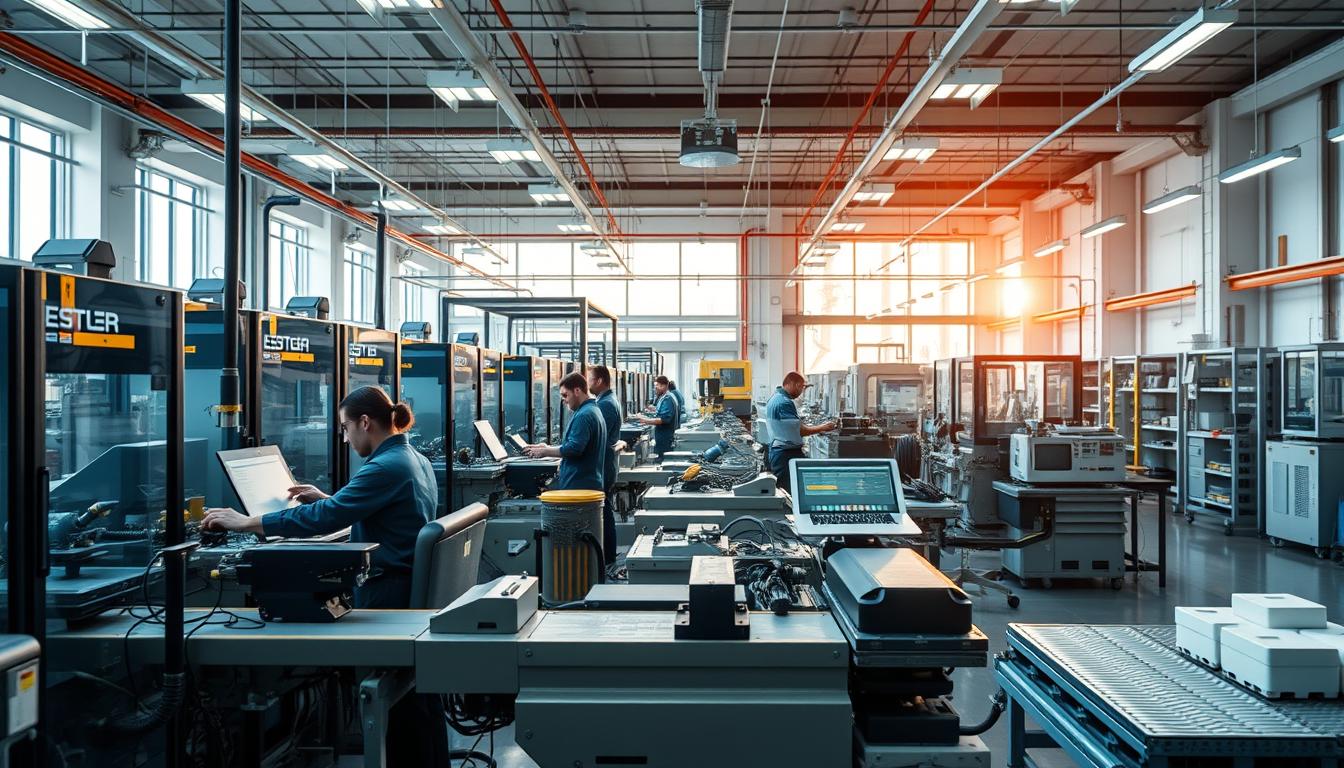
The global industrial sector in 2026 is characterized by an intensified focus on lean manufacturing principles, where the elimination of waste is no longer just a goal but a requirement for survival. In a world of rising energy costs and complex supply chains, the efficiency of an assembly line is measured by its ability to maintain continuous flow with minimal interruptions. While major investments are often directed toward high-end automation and robotics, many facility managers are discovering that significant gains in productivity—and substantial reductions in operational costs—actually stem from the granular optimization of the individual workstation. The intersection of ergonomics and lean methodology is where true resilience is built, particularly in how essential utilities like power and air are delivered to the hands of the operator.
At the heart of any lean strategy is the reduction of “muda,” or waste. In a manual or semi-automated assembly line, one of the most pervasive yet overlooked forms of waste is unnecessary movement. When a technician has to struggle with a tangled power cord, retrieve a tool from a cluttered floor, or navigate around floor-level obstructions, the line experiences “micro-downtime.” These few seconds lost hundreds of times a day across multiple shifts aggregate into hours of lost production. Furthermore, poor workspace organization is a primary driver of premature tool wear. Electrical cables and pneumatic hoses that are left exposed on the shop floor are subjected to constant mechanical stress, from being stepped on by workers to being crushed under the wheels of heavy logistics carts.
Clear floor
Engineering a “clear floor” policy is the most effective way to protect these technical assets and improve the ergonomic health of the workforce. By moving power distribution from the horizontal plane to a vertical or overhead configuration, factories can physically isolate sensitive cabling from the hazardous environment of the floor. During the design phase of a high-efficiency layout, procurement teams often look for hardware that integrates seamlessly into the workstation’s structure while providing consistent mechanical performance. For example, implementing high-durability solutions such as Zeca’s professional cable reels allows for a dynamic power supply that extends exactly to the required length and retracts instantly when the task is complete. This type of managed infrastructure ensures that electrical conductors remain protected within a reinforced housing, shielded from chemical spills and abrasive dust, thereby extending the lifespan of the tools and keeping the walking area permanently free of tripping hazards.
This focus on the “nervous system” of the assembly line—the cables and hoses—is directly linked to the 5S methodology (Sort, Set in order, Shine, Standardize, Sustain). A tool that is suspended and retractable is a tool that is never misplaced and, more importantly, never dropped. Dropping precision instruments is a leading cause of calibration drift, a costly issue in high-precision industries like aerospace or medical device manufacturing. Automatic rewinding systems act as a technical fail-safe, ensuring that the tool always returns to its “home” position at a controlled speed, maintaining the integrity of the equipment and the standardization of the workspace.
From an ergonomic perspective, the impact of a managed layout on worker fatigue cannot be overstated. Lean manufacturing teaches us that a tired worker is an error-prone worker. When an operator has to pull against the weight of a heavy trailing cable or spend energy managing a disorganized hose, they experience cumulative muscle strain in the shoulders and back. Modern retractable systems are designed with adjustable tension and precision locking mechanisms that give the tool a nearly weightless feel. By reducing the physical effort required to access and store equipment, the factory environment becomes “kinder” to the human element, which in turn reduces absenteeism related to musculoskeletal disorders—a major source of hidden downtime in the manufacturing sector.
The financial return
The financial return on investment (ROI) for these infrastructure upgrades is increasingly calculated through the lens of Overall Equipment Effectiveness (OEE). In a modern plant, a frayed power cord or a damaged hose is not just a replacement cost; it is a catalyst for an unplanned stop. If a station on a critical line goes down because of a faulty connection, the entire flow is compromised. Investing in high-quality winding systems that feature high-conductivity rotating contacts and built-in thermal protection is essentially an insurance policy for the plant’s technological capital. These systems ensure that power delivery remains stable, preventing the voltage fluctuations that can “burn out” the sensitive electronics found in modern smart-tools.
Finally, the visual order of a factory impacts its corporate image and safety audit outcomes. In an era where ESG (Environmental, Social, and Governance) ratings influence investment and contract awards, a clean, organized, and ergonomically sound factory floor is a powerful statement of a company’s operational maturity. It demonstrates a commitment to both the safety of the staff and the longevity of the manufacturing assets. A facility that has eliminated the chaos of trailing floor cables is a facility that is ready for the precision-demanding standards of Industry 4.0.
In conclusion, reducing tool wear and downtime on the assembly line requires a shift in perspective: from viewing cables and hoses as disposables to treating them as vital infrastructure. By integrating lean principles with ergonomic design and moving toward automated, retractable supply systems, manufacturers can bridge the gap between human comfort and mechanical efficiency. The result is a more productive, safer, and more profitable environment where every second and every tool is accounted for and protected.
Frequently Asked Questions (FAQ)
What is the specific risk of using floor-level cabling in an EV-ready factory?
In factories handling electric vehicles or high-voltage components, floor-level cabling is particularly dangerous. If the insulation of a high-amperage line is compromised by a forklift or heavy foot traffic, the risk of a high-energy arc flash or fire increases significantly. Managed, overhead systems are considered a critical safety standard in these environments to prevent any accidental contact between damaged conductors and metallic structures.
How do automatic reels help in maintaining ISO safety standards?
International standards like ISO 45001 focus on occupational health and safety. The use of automatic reels is a direct application of the “Hierarchy of Controls” by eliminating the hazard (the trip hazard) at the source. Auditors often view the presence of professionally installed winding systems as evidence of a robust proactive safety culture, facilitating easier compliance certification.
Can these systems be used in wash-down or corrosive environments?
Yes, but the material choice is vital. For industries such as food processing or chemical manufacturing, professional reels are available in AISI 304 or 316 stainless steel with specialized seals. These materials resist the corrosive effects of moisture and aggressive cleaning agents, ensuring that the rewinding mechanism remains functional and hygienic over thousands of cycles without rusting or contaminating the production area.
