



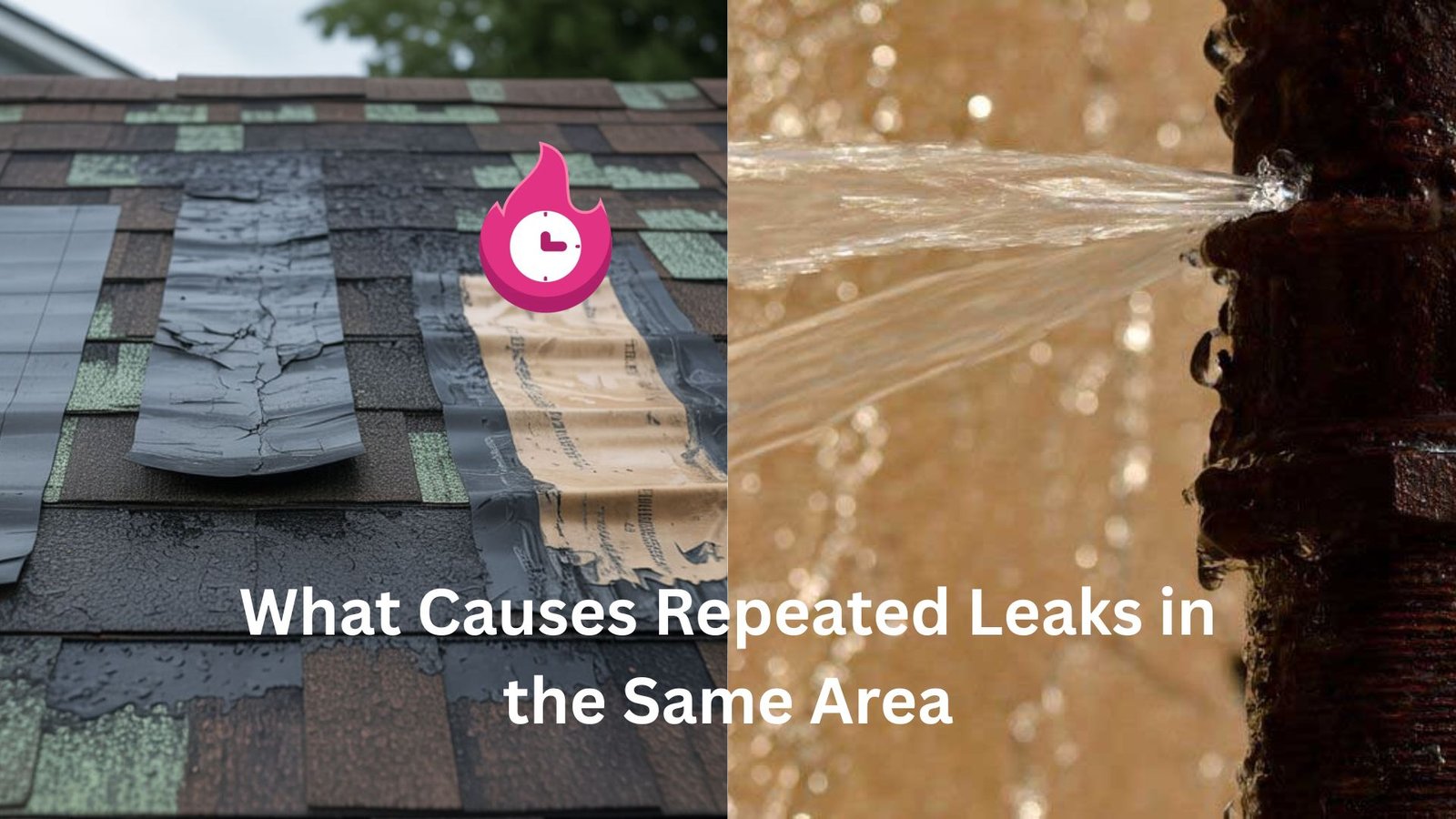
Finding a puddle on your floor or a brown stain on your ceiling is frustrating enough the first time around. But when you have already paid to fix it, and the water comes back in the exact same spot, it feels like a personal insult from the house itself. You might start wondering if your home is haunted or if your contractor just did a terrible job. If you find yourself constantly searching for roof repair Eagle Mountain to handle another drip in the kitchen, you are likely dealing with a hidden issue that simple patching cannot fix. It is a common headache for homeowners, and usually, the culprit is not as obvious as a single missing shingle.
The Problem With Quick Fixes
Finding a ceiling drip and immediately patching the shingles directly above it is a classic homeowner reflex. But remember, though this move is easy, it is rarely a permanent fix. Water is an expert at taking the scenic route; thanks to a mix of gravity and surface tension, it can enter through a small crack near the chimney and “hitchhike” along rafters, electrical wires, or insulation for several feet before finally dropping. If you only slap some roofing cement on the spot where the puddle formed, you’re treating the symptom rather than the disease.
The danger of this “band-aid” approach is the false sense of security it provides. When the dripping stops for a few days, you might assume the job is done, while in reality, the water has simply found a new path to pool or is quietly rotting out your structural framing. Because the actual entry point—the true source—was never sealed, the leak will inevitably reappear at its favorite exit point. To truly win the battle against a leaky roof, you have to play detective and trace the path of the water all the way back to the exterior breach.
Flashings Are Frequently To Blame
If you have a leak near a chimney, a skylight, or the flashing is almost always the guilty party. The same holds true if you have a wall that meets the roof line. Flashing consists of thin metal bits designed to direct water away from junctions. Over time, these metal sheets can rust, warp, or pull away from the structure.
Many contractors try to fix old flashing by glooping massive amounts of caulk or sealant over the gaps. This is a temporary band-aid at best. Solar heat causes your roof to expand and contract every single day. That movement eventually cracks the dried sealant, and the water finds its way back in. Until the metal flashing is actually removed and replaced correctly, that specific spot will continue to leak every time the wind blows the rain at just the right angle.
The Nightmare of Trapped Moisture
Sometimes the “leak” you see isn’t even coming from the outside. If a leak has happened in the same spot several times, there is a high chance that the insulation in your attic is completely saturated. Wet insulation acts like a giant sponge. Even after you fix the hole in the roof, that sponge remains heavy and damp.
On humid days or during temperature shifts, that trapped moisture can condense and drip back down through the ceiling. This creates the illusion of a fresh roof leak. Furthermore, if the wood decking under your shingles has started to rot from repeated exposure, it becomes porous. It will hold onto moisture and slowly let it seep through, even during dry spells. True resolution often requires stripping away the damaged interior materials rather than just poking at the shingles outside.
Clogged Gutters and Ice Dams
In areas with cold winters, ice dams are a major reason for repeated leaks. When heat escapes from your attic, it melts the snow on the roof. That water runs down to the cold eaves and freezes again, creating a wall of ice. This wall traps any subsequent meltwater, forcing it to back up under the shingles.
If your home has poor ventilation or insufficient insulation, this cycle repeats every single winter. You can fix the shingles a dozen times, but if the ice keeps backing up, the water will keep finding a way inside. Similarly, if your gutters are full of leaves, the water has nowhere to go. It pools at the edge of the roof and works its way under the bottom layer of felt paper. Cleaning the gutters or fixing the attic airflow is often the only way to stop the cycle for good.
Poor Workmanship and Cheap Materials
It is a hard pill to swallow, but sometimes the repeat leak is the result of a bad previous repair. Not all roofing materials are compatible with one another. If a repair person used a silicone-based sealer over an asphalt surface, it might not bond correctly. Within a few months, the patch peels up and the water returns.
Nail pops are another common issue. If a roofer used nails that were too short or didn’t hit the rafters, the nails can slowly back out of the wood. This lifts the shingle up and creates a tiny hole that acts like a funnel for rainwater. It takes a trained eye to spot these small mechanical failures, but they are a primary reason why DIY patches often fail within a year.
Final Word
Dealing with a recurring ceiling stain is enough to make any homeowner lose their mind. It is usually a sign that the root cause is being overlooked in favor of a fast, cheap solution. To truly get rid of the problem, you need to look beyond the shingles and check the flashing, the ventilation, and the hidden spaces in your attic. Once you invest in a professional roof repair Eagle Mountain, you can finally put away the buckets and enjoy a rainy day without checking the ceiling every ten minutes.
